Low carb keto breakfast porridge is a warm, creamy, and satisfying morning meal that delivers steady energy without spiking blood sugar levels. This innovative breakfast replaces traditional oatmeal with nutrient-dense, keto-friendly ingredients that keep you in ketosis while providing complete satiation. Unlike conventional porridge loaded with refined carbohydrates, this version combines coconut milk, almond flour, chia seeds, and MCT oil to create a luxurious texture that rivals any grain-based breakfast. The result is a nutrient-packed dish that supports your low carb lifestyle while tasting indulgent and comforting on cold mornings.
| Metric | Value |
|---|---|
| Prep Time | 5 minutes |
| Cook Time | 8 minutes |
| Total Time | 13 minutes |
| Servings | 2 servings |
| Difficulty | Easy |
| Cuisine | American Keto |
Why This Recipe Works
I discovered this keto breakfast porridge during my transition to low carb eating when I craved the comfort and texture of traditional oatmeal but needed to stay under my daily carbohydrate limit. The combination of coconut milk and almond flour creates a naturally creamy base that mimics the mouthfeel of grain-based porridge without any of the blood sugar disruption. After testing dozens of variations, I found that chia seeds provide the perfect thickness while adding omega-3 fatty acids and fiber, making this recipe genuinely satiating until lunch.
The genius of this formula lies in MCT oil, which provides rapid energy that your ketone-fueled body absorbs immediately. This ingredient transforms standard porridge into a performance-enhancing breakfast that supports mental clarity and sustained energy throughout your morning. Unlike carb-heavy breakfasts that trigger energy crashes by 10 AM, this keto version keeps your metabolism stable and your appetite suppressed.
Vanilla extract and cinnamon elevate the flavor profile without adding carbohydrates, creating depth that prevents the meal from tasting restrictive or bland. I’ve served this to non-keto friends who were genuinely surprised it contained no grains or sugar, proving that keto breakfast doesn’t require compromise on taste or satisfaction. The recipe scales effortlessly from single servings to weekend meal prep, adapting to your schedule without sacrificing nutritional integrity.
Temperature control is essential to this recipe’s success, which is why I recommend medium-low heat throughout the cooking process. High heat can separate the coconut milk and create an unpleasant grainy texture that undermines the smooth, porridge-like consistency you’re building. This gentle approach ensures the ingredients emulsify properly while developing the creamy mouthfeel that makes keto breakfast enjoyable rather than merely acceptable.
Ingredients
| Ingredient | Quantity | Notes with Alternatives |
|---|---|---|
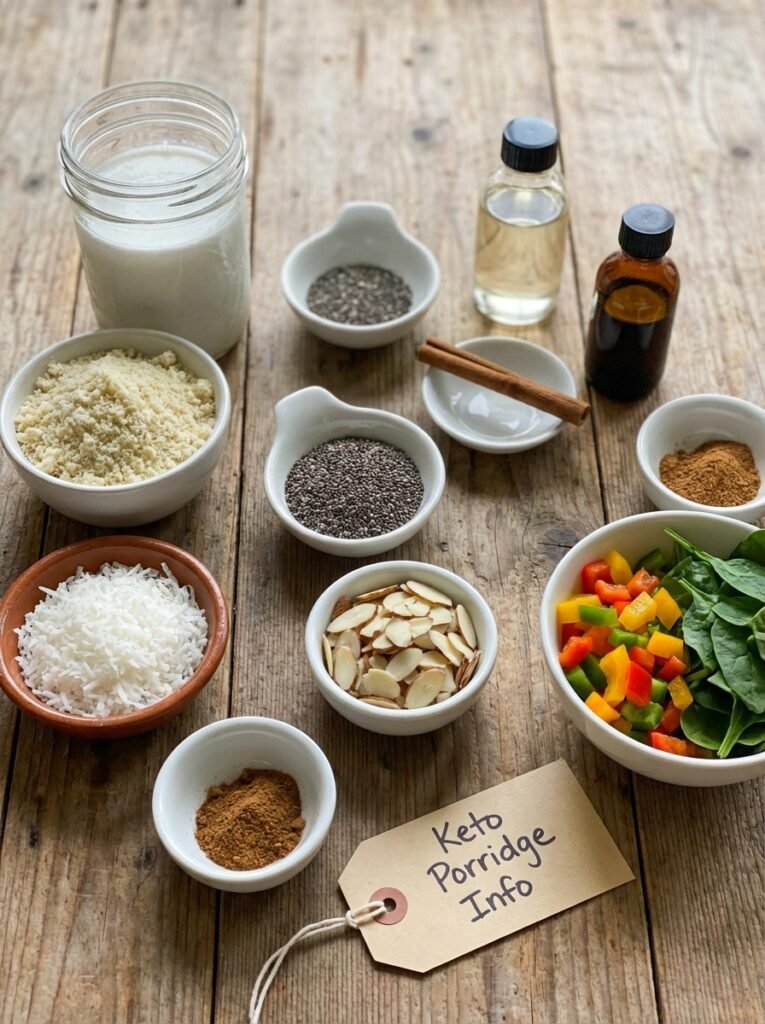
| Full-Fat Coconut Milk | 1 cup (240 ml) | Use canned, not carton. Shake well before opening. Heavy cream is a substitute but adds 1g carb per serving. |
| Almond Flour | 1/4 cup (28 grams) | Must be finely ground blanched almond flour. Whole almond meal will create gritty texture. Macadamia flour works similarly. |
| Chia Seeds | 2 tablespoons (20 grams) | Black or white varieties work identically. Do not use ground chia; whole seeds provide better texture and absorption control. |
| MCT Oil | 1 tablespoon (15 ml) | Derived from coconut oil but with faster absorption. Coconut oil substitutes but stays solid when cold. Ghee adds buttery richness. |
| Vanilla Extract | 1/2 teaspoon (2.5 ml) | Use pure vanilla extract only. Imitation contains added carbs from sweeteners. Almond extract (1/4 tsp) provides different complexity. |
| Ground Cinnamon | 1/4 teaspoon (0.5 grams) | Ceylon cinnamon is sweeter than cassia. Add to taste; extra cinnamon mimics sweetness without carbs. |
| Stevia | 2-3 drops or 1/4 teaspoon (to taste) | Liquid stevia mixes more smoothly than powder. Erythritol (1 tsp) adds slight cooling effect. Monk fruit sweetener has zero aftertaste. |
| Sea Salt | Pinch (0.1 grams) | Enhances vanilla and cinnamon flavors. Do not omit; salt amplifies sweetness perception naturally. |
| Unsweetened Shredded Coconut | 2 tablespoons (14 grams) | Optional topping. Adds texture and coconut richness without additional carbs. Toast briefly for deeper flavor. |
| Sliced Almonds | 2 tablespoons (14 grams) | Optional topping for crunch. Walnuts or pecans substitute but change mouthfeel slightly. |
| Fresh Berries | 1/4 cup (60 grams) | Optional topping. Raspberries (lowest carb) or blueberries in moderation. Adds 2-4g net carbs per serving. |
Step-by-Step Instructions
Preparation Phase
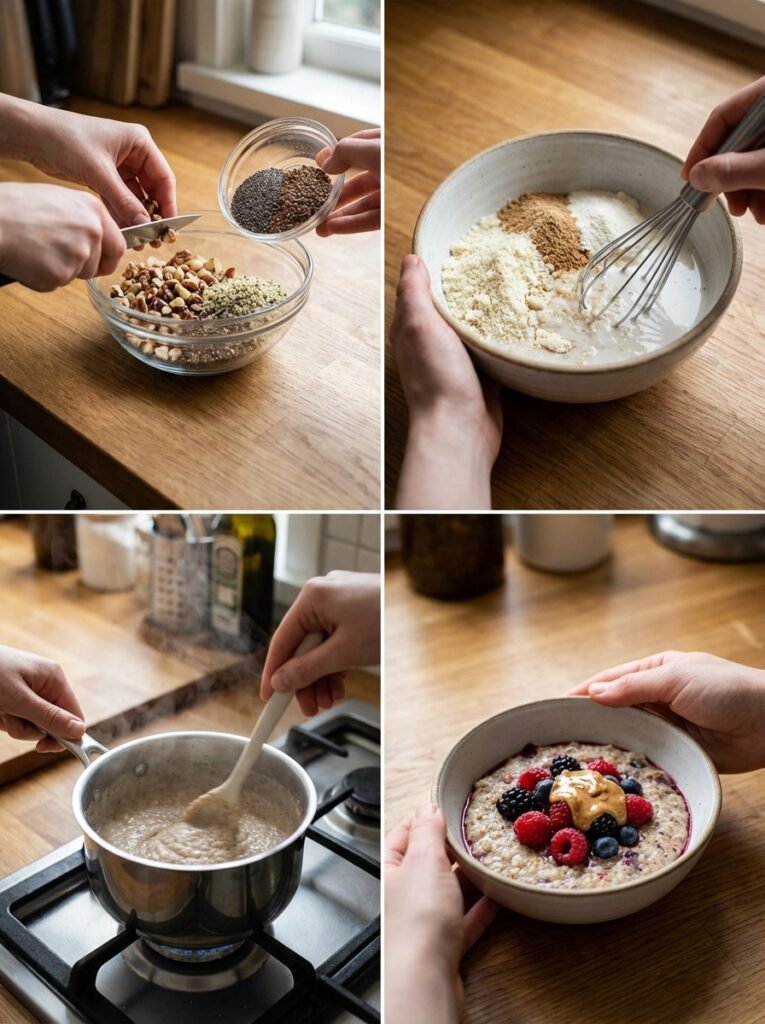
- Pour the full-fat coconut milk into a medium saucepan, shaking the can thoroughly before opening to incorporate any separated cream on the bottom. Add the almond flour, chia seeds, and MCT oil to the saucepan at once.
- Whisk the mixture vigorously for 30 seconds to break up any almond flour clumps and evenly distribute the MCT oil throughout the liquid. This prevents grainy texture and ensures smooth emulsification during heating.
Cooking Phase
- Set your burner to medium-low heat and place the saucepan on the flame, stirring constantly with a wooden spoon or silicone spatula. Do not walk away; the porridge requires constant attention to prevent lumps and sticking.
- Heat for 3-4 minutes, stirring every 10-15 seconds, until the mixture reaches a simmer and begins thickening noticeably. You should see small bubbles breaking the surface, but avoid rolling boil as this can separate the coconut milk.
- Add the vanilla extract, ground cinnamon, and sea salt, stirring thoroughly to combine. The mixture will thicken further as the chia seeds absorb liquid and expand, creating the porridge consistency.
- Continue heating for an additional 2-3 minutes while stirring frequently, until the porridge reaches your desired thickness. The mixture should coat the back of a spoon but still move slowly when tilted.
Sweetening and Finishing
- Remove the saucepan from heat and add your chosen sweetener (stevia, erythritol, or monk fruit), tasting and adjusting to your preference. Remember that sweetness perception changes slightly as the porridge cools, so start conservatively.
- Divide the porridge between two serving bowls, working quickly while still warm, as chia seeds continue absorbing liquid and thickening the mixture.
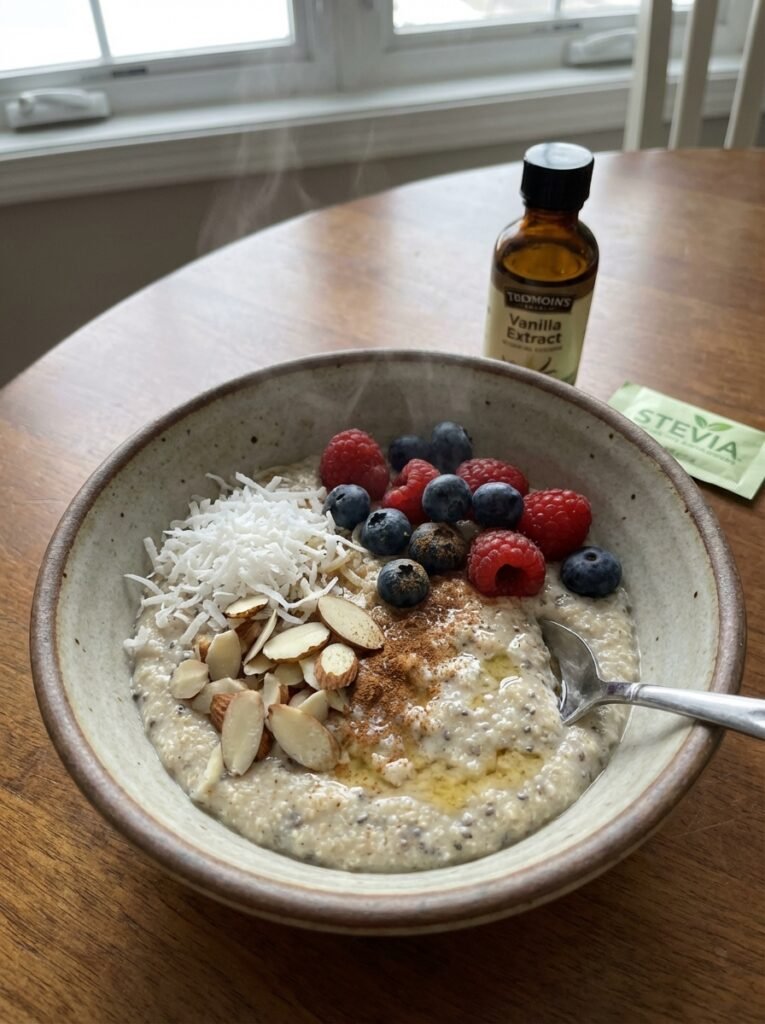
- Top each bowl immediately with unsweetened shredded coconut, sliced almonds, and fresh berries if desired, creating textural contrast and visual appeal.
- Serve immediately while the porridge is hot, as cooling reduces the comforting quality of the dish. Eat with a spoon, savoring the creamy texture and warm spice notes.
Chef Tips for Perfect Results
- Shake coconut milk vigorously before opening: Full-fat coconut milk separates during storage, with cream rising to the top and thinner liquid settling below. Shaking redistributes the fat content evenly, creating the creamy texture this recipe requires. If you open the can without shaking, you’ll end up with overly thin porridge and wasted premium coconut cream.
- Use medium-low heat exclusively: High heat causes coconut milk to break and separate, creating graininess that ruins the smooth porridge texture. Medium-low maintains gentle emulsification while allowing chia seeds to hydrate properly without burning the bottom of the pan.
- Stir constantly during the entire cooking process: Chia seeds settle quickly and can clump if left undisturbed, creating unpleasant texture pockets. Constant stirring keeps seeds suspended evenly and prevents the porridge from sticking to the pan bottom.
- Add sweetener after removing from heat: Heating some sweeteners (particularly stevia) can intensify undesirable flavors or create a slightly bitter aftertaste. Waiting until the porridge cools slightly allows you to taste as you sweeten, achieving perfect balance without over-correcting.
- Taste and adjust seasoning aggressively: Cinnamon and vanilla are subtle flavors that require full saturation to shine. Many people under-season this porridge initially; don’t hesitate to add an extra 1/8 teaspoon cinnamon or more vanilla if flavors taste muted.
- Top immediately after serving: Nuts and coconut stay crunchier when placed on hot porridge just before eating. If toppings sit too long, the heat softens them, eliminating the textural contrast that makes this dish interesting.
Common Mistakes to Avoid
Mistake 1: Using Thin Coconut Milk from Carton Packaging
Many people substitute canned full-fat coconut milk with refrigerated carton varieties, which are significantly thinner and contain added gums and stabilizers. This creates watery porridge that never reaches proper consistency. Fix this by purchasing canned coconut milk exclusively, checking that the first ingredient is coconut and the product contains at least 15 grams fat per serving.
Mistake 2: Cooking on High Heat
High heat speeds up cooking but separates the coconut milk and can scorch the almond flour, creating bitter flavor and gritty texture. The porridge seizes up rather than flowing smoothly. Lower your heat to medium-low and accept that proper keto porridge requires full 6-8 minutes of patient cooking to achieve the right consistency.
Mistake 3: Not Whisking Enough Before Heating
Almond flour clumps easily when cold, and if not dispersed thoroughly before heating, these clumps remain hard even after cooking. Spend 45 full seconds whisking vigorously to break up every particle, ensuring smooth texture throughout the finished porridge.
Mistake 4: Over-Sweetening the Porridge
Sweeteners taste stronger in hot liquids than in cooled dishes, so oversweetening is extremely common with this recipe. Add sweetener gradually after removing from heat, tasting frequently. You can always add more, but you cannot remove excess sweetness without diluting the entire batch.
Mistake 5: Skipping the Sea Salt
A tiny pinch of sea salt doesn’t make the porridge taste salty; instead, it amplifies vanilla and cinnamon flavors, creating perceived sweetness without additional sweetener. Omitting salt makes the porridge taste flat and one-dimensional, requiring extra sweetener to compensate.
Mistake 6: Letting the Porridge Cool Too Long Before Eating
Chia seeds continue absorbing liquid even after cooking stops, progressively thickening the porridge until it becomes almost pudding-like if left longer than 15 minutes. Eat immediately while the texture is still flowing and warm, storing leftovers separately if meal prepping.
Variations and Substitutions
| Ingredient | Substitution | Impact on Flavor and Texture |
|---|---|---|
| Coconut Milk | Heavy Cream (3/4 cup) + Water (1/4 cup) | Creates richer, slightly buttery flavor. Requires 1/4 tsp xanthan gum to achieve identical thickness. Adds 1g net carb per serving. |
| Almond Flour | Macadamia Nut Flour (1/4 cup) | Produces creamier, more luxurious mouthfeel with subtle tropical undertone. Maintains identical carbohydrate profile. |
| MCT Oil | Coconut Oil (1 tablespoon) | Adds coconut flavor intensity. Will solidify if porridge cools; acceptable for meal prep. Same caloric and carb profile. |
| Cinnamon | Pumpkin Pie Spice (1/4 tsp) or Cardamom (1/8 tsp) | Pumpkin spice creates autumn-inspired warmth. Cardamom offers sophisticated, floral complexity. Both increase perceived sweetness. |
| Vanilla Extract | Almond Extract (1/4 tsp) or Coconut Extract (1/4 tsp) | Almond extract strengthens nuttiness dramatically. Coconut extract intensifies tropical profile. Use sparingly as these are intensely flavored. |
| Fresh Berries Topping | Crushed Macadamia Nuts + Unsweetened Cocoa Nibs (2 tbsp total) | Creates chocolate-nut flavor profile. Eliminates berry carbohydrates entirely. Adds satisfying crunch without softening in heat. |
| Stevia Sweetener | Monk Fruit Sweetener or Erythritol (1 tsp) | Monk fruit has zero aftertaste and creates cleaner sweetness. Erythritol offers most sugar-like texture but adds slight cooling effect. All maintain zero net carbs. |
Serving Suggestions and Pairings
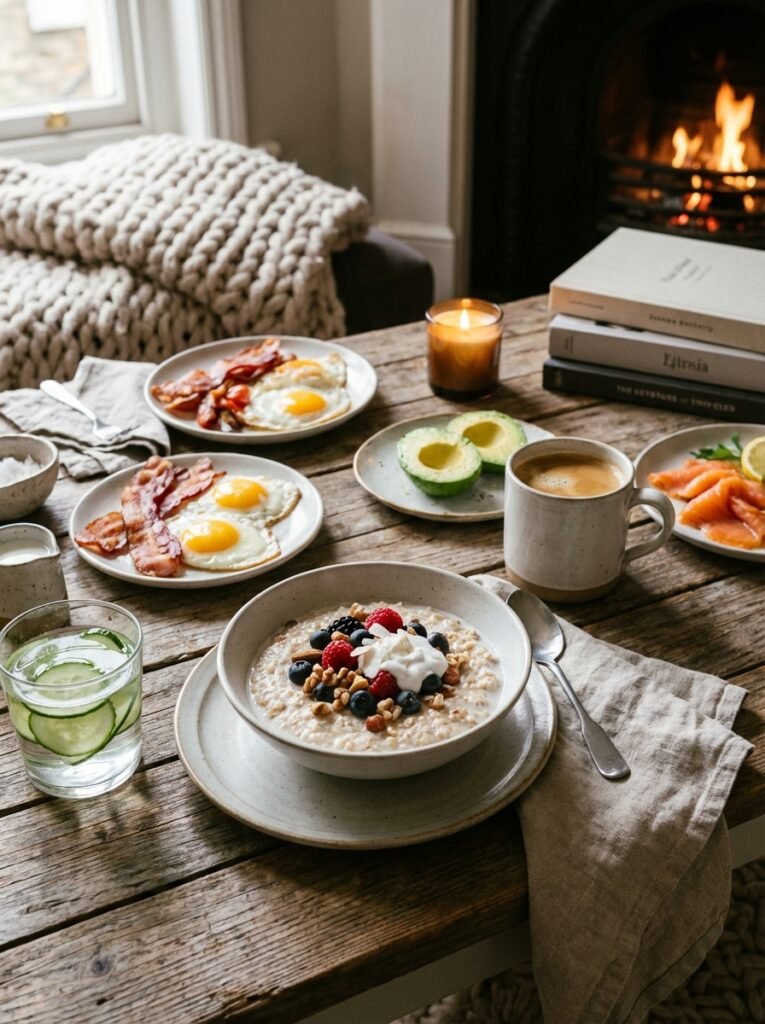
Serve this low carb keto breakfast porridge as your morning meal any day of the week, but particularly on cold winter mornings when warm, comforting foods feel most appealing. The creamy texture and warm spice notes make this an ideal breakfast for people transitioning from traditional oatmeal to keto lifestyle, as it satisfies the psychological desire for porridge while maintaining ketosis.
Pair this porridge with unsweetened iced tea or black coffee to create a balanced breakfast that supports mental clarity for work-focused mornings. The MCT oil in the porridge combines synergistically with caffeine, enhancing sustained energy and focus. For a more indulgent breakfast, serve alongside a small 1-ounce piece of sharp cheddar cheese or a handful of macadamia nuts to add savory contrast.
This breakfast works beautifully for weekend brunch gatherings where you want to stay keto while others enjoy traditional fare. Guests are often surprised that such a luxurious-tasting breakfast contains no grains or refined sugar, making it a conversation starter about sustainable low carb eating. Consider making a double batch and serving it in individual mugs with toppings on the side, allowing guests to customize their portions.
Serve this porridge specifically on mornings when you know you’ll have demanding physical or mental tasks ahead. The combination of fats, protein, and chia seeds provides sustained satiation and energy that carries you through extended work sessions without energy crashes. Track your hunger and energy levels carefully when eating this breakfast to identify whether you need smaller portions or additional ingredients.
Time your consumption strategically within your eating window if practicing intermittent fasting. The high fat content means this breakfast stays with you longer, making it ideal for 16:8 fasting protocols where you compress eating into an 8-hour window. The steady energy prevents aggressive hunger in the final pre-eating-window hours.
Storage and Reheating
| Method | Duration | Instructions |
|---|---|---|
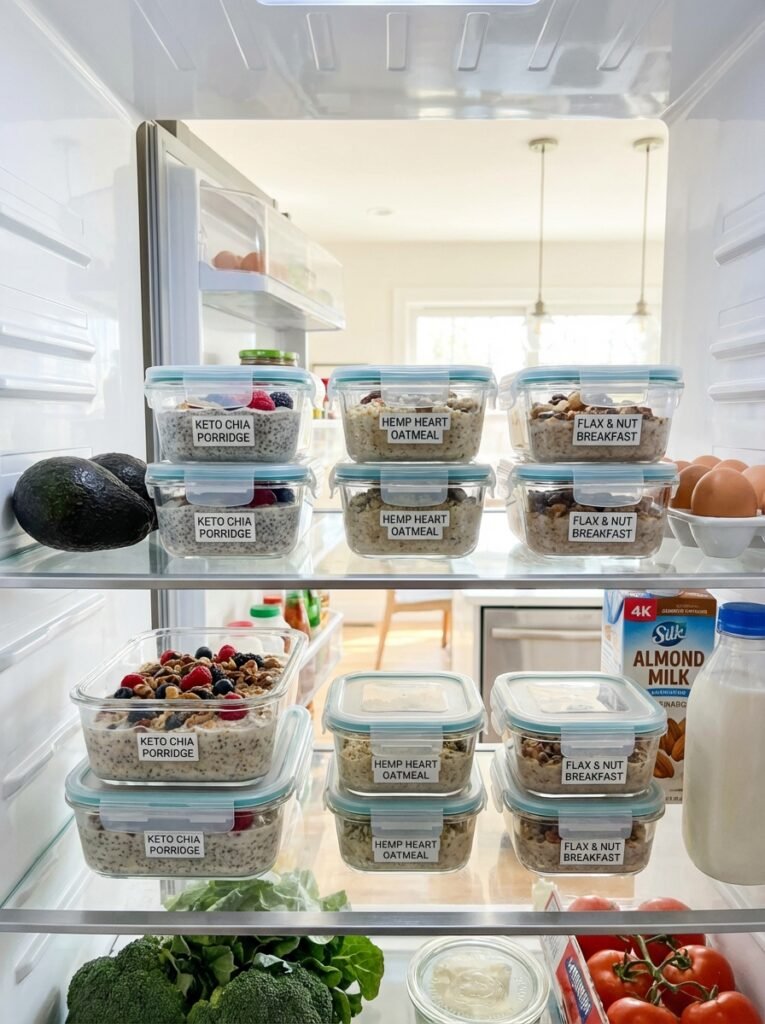
| Refrigerator Storage | Up to 4 days | Transfer cooled porridge to an airtight glass container. The mixture will thicken significantly as chia seeds continue absorbing liquid. When ready to eat, reheat gently on stove over medium-low heat with 2-3 tablespoons water or coconut milk to restore original consistency. Stir constantly to prevent scorching on the bottom. |
| Microwave Reheating | Individual portions, 1-2 minutes | Transfer portion to microwave-safe bowl, add 2 tablespoons liquid (water or milk), and heat at 50% power for 60-90 seconds, stirring halfway through. Avoid full power as this can separate the coconut milk. Stir thoroughly after heating to achieve smooth texture. |
| Freezer Storage | Up to 2 weeks | Cool porridge completely, divide into ice cube trays for portion control, and freeze solid. Transfer frozen cubes to freezer bag labeled with date. Thaw overnight in refrigerator, then reheat using refrigerator method above. Some texture separation may occur; extra stirring restores smoothness. |
| Room Temperature (Emergency) | Up to 2 hours | If traveling or without refrigeration access, covered porridge stays safe at room temperature for short periods. The high fat content and coconut milk provide natural preservation, though porridge thickens substantially. Do not leave uncovered to prevent contamination or bacterial growth. |
Nutritional Information
The following nutritional values are approximate and calculated based on standard ingredient measurements without optional toppings. Actual values vary slightly depending on specific brands and whether you add berries or nuts as toppings. Use these figures as guidance for macronutrient tracking within your personal keto goals.
| Nutrient | Amount per Serving |
|---|---|
| Calories | 320 calories |
| Total Fat | 30 grams |
| Saturated Fat | 22 grams |
| Protein | 6 grams |
| Total Carbohydrates | 8 grams |
| Dietary Fiber | 5 grams |
| Net Carbohydrates | 3 grams |
| Sugar | 0 grams (less than 1g) |
| Sodium | 65 milligrams |
| Potassium | 185 milligrams |
Frequently Asked Questions
Can I make low carb keto breakfast porridge without chia seeds?
You can substitute chia seeds with ground flaxseed in equal quantity, though the resulting texture will be slightly coarser and less gelatinous. Psyllium husk (1 tablespoon) works but creates a denser, more pudding-like consistency requiring 2-3 additional minutes of cooking. The chia seeds specifically provide the ideal balance of thickening power and smooth mouthfeel, so substitutes compromise texture slightly.
Is this recipe suitable for people with tree nut allergies?
No, this recipe contains almond flour and optional almond toppers, making it unsafe for tree nut allergies. You could theoretically substitute sunflower seed butter for almond flour and sunflower seed meal, but this creates a fundamentally different recipe with altered nutrition and texture. Those with severe allergies should consult an allergist before attempting modifications.
How can I make this porridge taste less coconutty if I dislike coconut flavor?
Reduce coconut milk to 3/4 cup and replace the remaining 1/4 cup with heavy cream, which eliminates much of the coconut intensity while maintaining fat content. Increase vanilla extract to 3/4 teaspoon and add 1/8 teaspoon almond extract to create depth that masks residual coconut flavor. The cinnamon also strengthens and becomes more prominent, shifting the flavor profile away from tropical toward warm spice notes.
Can I meal prep this recipe for the entire week?
Yes, you can store this porridge refrigerated for up to 4 days, making it perfect for 4-day meal prep rotations within a longer work week. Prepare once and divide into four containers, adding liquid when reheating since chia seeds continue absorbing moisture. Do not freeze for extended periods as texture becomes slightly grainy upon thawing, though it remains nutritionally complete and safe to eat.
What should I do if my porridge turns out too thick?
Thick porridge results from chia seeds absorbing more liquid than intended, often from extended cooking time or waiting too long before eating. Immediately add 1-2 tablespoons of warm water or coconut milk and stir vigorously to achieve desired consistency. Next time, reduce cooking time by 1-2 minutes or add slightly less chia seeds if you prefer thinner, pourable porridge.
Can I use this recipe for weight loss on keto diet?
Yes, this porridge supports ketogenic weight loss by providing high satiation from fats while maintaining minimal net carbohydrates. The MCT oil specifically supports fat burning through rapid ketone production. One serving contains only 3 grams net carbs, maintaining ketosis even with multiple servings daily. Pair with resistance training and consistent calorie awareness for optimal results.
Is there a way to add protein powder to this recipe?
Add 1 scoop vanilla or unflavored whey protein powder after removing from heat, stirring thoroughly to prevent clumping. Use vanilla whey specifically, as chocolate or fruity varieties can clash with cinnamon and coconut flavors. This increases protein to approximately 20 grams per serving while adding minimal carbohydrates, depending on your protein powder brand.
What’s the best sweetener for this porridge if I’m sensitive to artificial flavors?
Monk fruit sweetener offers the cleanest taste profile with zero aftertaste and no bitter notes, making it ideal for sweetener-sensitive people. Use liquid monk fruit or powdered varieties, starting with 1/4 teaspoon and tasting before adding more. Avoid aspartame-based products which can taste metallic in hot liquids.
Can I cook this porridge the night before and eat it cold?
You can, but the experience differs significantly from hot porridge. Cold keto breakfast porridge resembles thick pudding more than traditional porridge, which some people prefer and others find unappealing. Add extra liquid (3-4 tablespoons) when preparing the night before to compensate for continued chia seed absorption during refrigeration. Cold porridge stays safe for 4 days when properly stored.
How can I make this recipe for single servings instead of two?
Divide all ingredient quantities in half: 1/2 cup coconut milk, 2 tablespoons almond flour, 1 tablespoon chia seeds, 1/2 tablespoon MCT oil, and corresponding reductions of vanilla, cinnamon, sweetener, and salt. Single-serving batches cook in approximately 5-6 minutes total time. The process remains identical; only the volume changes, so cooking time decreases slightly.
Conclusion
Low carb keto breakfast porridge represents a genuine breakthrough for people transitioning to ketogenic eating who miss the comfort and warmth of traditional grain-based breakfasts. This recipe demonstrates that keto lifestyle doesn’t require sacrifice of taste, texture, or satisfaction, delivering instead a breakfast that exceeds conventional porridge in both nutrition and sustained energy. The combination of coconut milk, almond flour, chia seeds, and MCT oil creates genuine magic, transforming simple ingredients into a luxurious morning meal that supports your metabolic health while satisfying psychological cravings for warm, creamy breakfast foods.
The beauty of this low carb keto breakfast porridge lies in its versatility and dependability. You can prepare it in under 15 minutes on rushed mornings, meal prep it for the entire work week, or customize it endlessly through flavor variations and topping combinations. Whether you’re a keto beginner seeking satisfying breakfast options or an experienced low carb enthusiast wanting to expand your recipe repertoire, this porridge deserves permanent placement in your cooking rotation.
Start your morning with this creamy, spiced keto porridge and experience the sustained focus, stable energy, and complete satiation that only genuinely nourishing food provides. Your body will thank you for the healthy fats and fiber, your taste buds will celebrate the warm cinnamon and vanilla notes, and your commitment to keto lifestyle will strengthen with every satisfying spoonful.
Print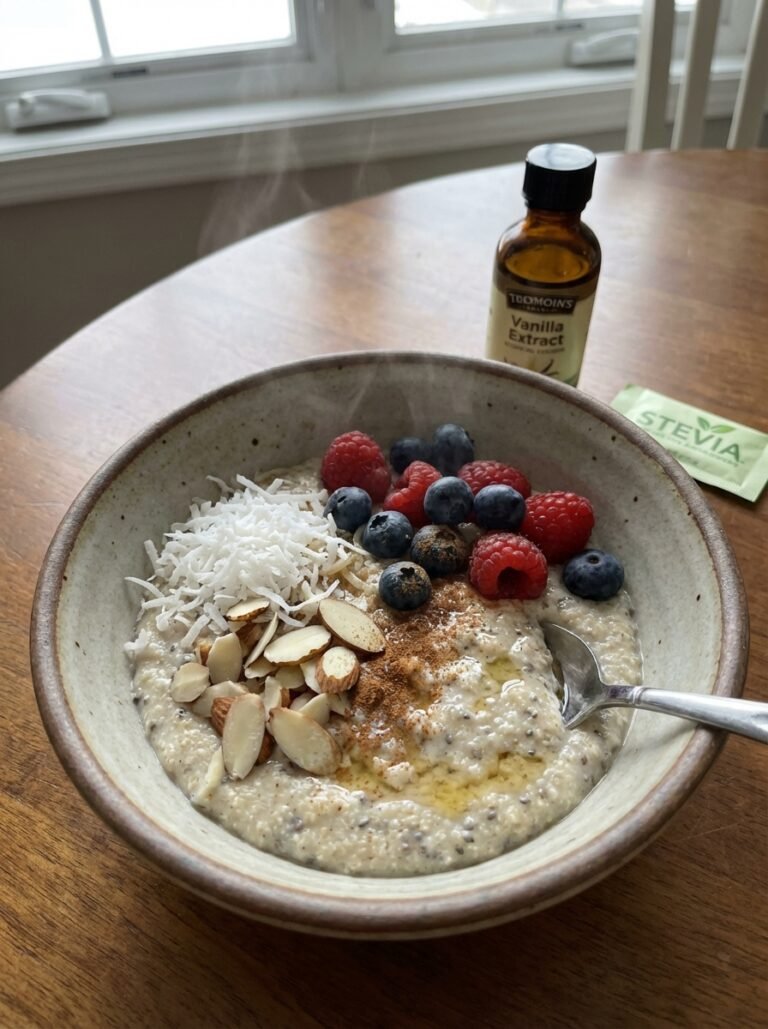
Low Carb Keto Breakfast Porridge
A warm, creamy tropical keto porridge made with coconut milk, almond flour, chia seeds, and MCT oil. Rich in healthy fats and fiber, this grain-free recipe keeps you full and in ketosis with no refined carbs or sugar.
- Total Time: 13
- Yield: 2 servings 1x
Ingredients
2 cups coconut milk (full-fat canned or unsweetened carton)
1/2 cup almond flour
2 tablespoons chia seeds
2 tablespoons MCT oil
1/2 teaspoon ground cinnamon (plus extra for topping)
1 teaspoon pure vanilla extract
3 tablespoons unsweetened shredded coconut
1/4 cup sliced almonds
1/2 cup fresh berries (strawberries, blackberries, or blueberries)
10 drops stevia (or to taste)
Instructions
Whisk almond flour, chia seeds, cinnamon, and stevia in a saucepan
Add coconut milk, MCT oil, and vanilla extract. Stir well to combine
Cook over medium heat for 5-6 minutes, stirring constantly until thickened
Remove from heat and let sit undisturbed for 3 minutes
Top with sliced almonds, fresh berries, and additional shredded coconut before serving
Notes
Coconut milk thickens as it cools
For extra texture, add crushed pecans or pumpkin seeds as toppings
Storage: Best consumed fresh or refrigerated for up to 24 hours
You can use a low-carb sweetener instead of stevia if preferred
- Prep Time: 5
- Cook Time: 8
- Category: Breakfast
- Method: Stovetop
- Cuisine: American Keto
- Diet: Keto
Nutrition
- Serving Size: 1 bowl
- Calories: 320
- Sugar: 1g
- Sodium: 60mg
- Fat: 28g
- Saturated Fat: 20g
- Carbohydrates: 9g
- Fiber: 6g
- Protein: 10g
- Cholesterol: 0mg