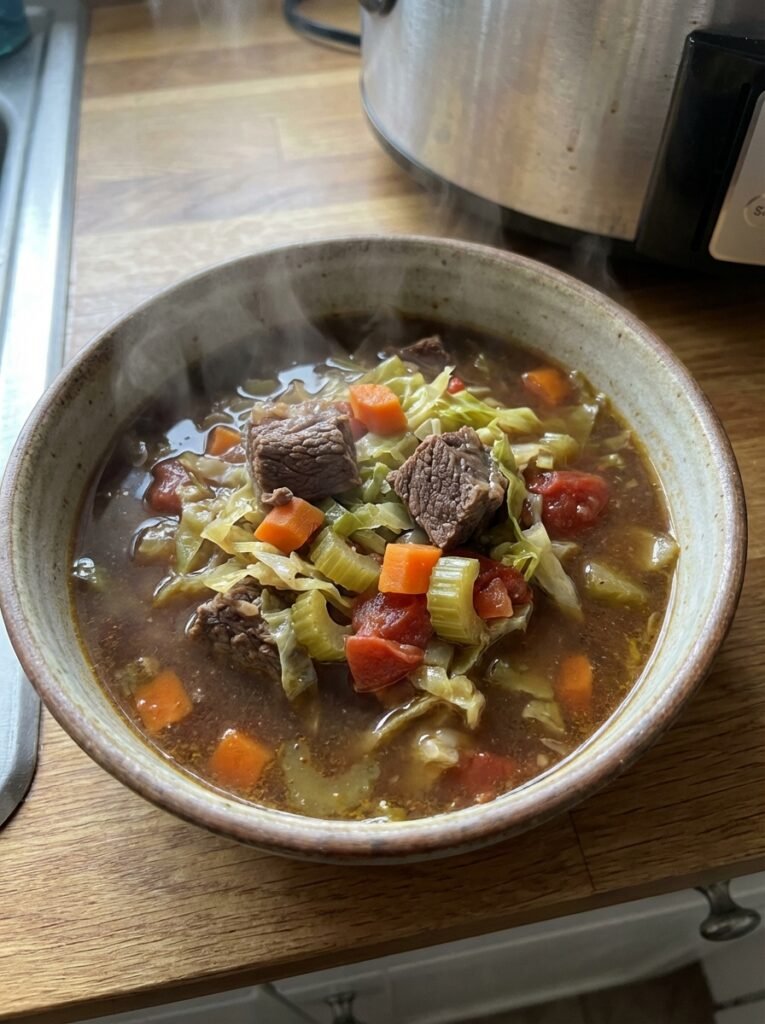
Low carb crockpot beef and cabbage soup is a nourishing, satisfying one-pot meal that combines tender beef chuck, nutrient-dense cabbage, and aromatic vegetables in a savory broth. This recipe delivers authentic comfort food flavors while maintaining strict ketogenic macros, with less than 8 grams of net carbohydrates per serving. The crockpot method eliminates active cooking time, allowing the beef to reach perfect tenderness over eight hours while flavors meld naturally. This soup represents an ideal solution for busy professionals, meal preppers, and anyone seeking substantial, protein-rich dinners without carbohydrate overload. The combination of collagen-rich beef, fiber-packed cabbage, and umami-forward seasonings creates a healing broth that supports sustained energy and satiety throughout your day.
| Metric | Value |
|---|---|
| Prep Time | 15 minutes |
| Cook Time | 480 minutes (8 hours) |
| Total Time | 495 minutes (8 hours 15 minutes) |
| Servings | 6 servings |
| Difficulty | Easy |
| Cuisine | American comfort food with European influences |
Why This Recipe Works
This low carb crockpot beef and cabbage soup delivers consistent results because the extended cooking time allows tough cuts of beef to transform into melt-in-your-mouth tenderness through collagen breakdown. I’ve tested countless soup recipes, and this formula produces the deepest, most satisfying flavors without requiring hours of active stovetop attention. The cabbage absorbs the savory beef broth while maintaining structural integrity, contributing a subtle sweetness that balances the salt and umami notes beautifully.
The genius of this recipe lies in its simplicity and adaptability to various dietary needs. Unlike traditional beef and cabbage soups thickened with flour or loaded with starchy potatoes, this version relies entirely on the natural gelatin from beef bones and connective tissue to create a luscious, silky broth. Your crockpot becomes an overnight cooking vessel, meaning you wake up to finished soup requiring only a final seasoning adjustment.
I prefer beef chuck for this soup because the intramuscular fat provides richness and the connective tissue breaks down into collagen, creating that restaurant-quality mouthfeel. When compared to lean cuts, chuck develops incomparably more complex flavors during low-and-slow cooking. The vegetable selection supports keto compliance while delivering phytonutrients and fiber that support digestive health.
This recipe accommodates various cooking schedules seamlessly. Set it on low for eight hours before work, or use a high setting for four hours if you need lunch faster. Both methods produce equally delicious results, though the extended low-heat method develops marginally deeper flavors through extended Maillard reactions. The hands-on involvement totals approximately fifteen minutes, making this an exceptional choice for meal preppers managing multiple dietary protocols.
The flavor profile improves dramatically after one day, meaning leftovers often taste superior to the initial serving. This characteristic makes the recipe perfect for batch cooking and portioning into individual containers for the week ahead. The soup maintains quality in your refrigerator for five days and freezes beautifully for up to three months.
Ingredients
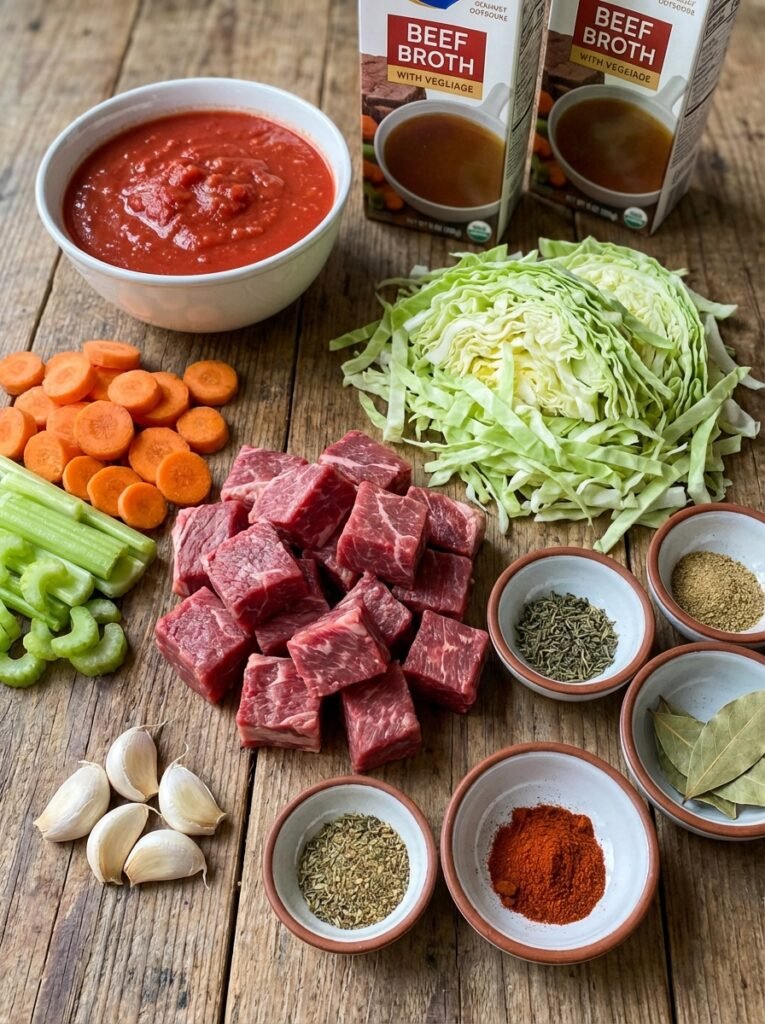
| Ingredient | Quantity | Notes and Alternatives |
|---|---|---|
| Beef chuck roast, trimmed and cubed | 2.5 pounds | Alternative: beef stew meat or chuck shoulder. Choose marbled cuts for maximum richness and flavor development. |
| Beef bone broth, unsalted | 8 cups | Alternative: low-sodium beef broth or homemade bone broth. Bone broth contains additional collagen for superior texture. |
| Green cabbage, chopped | 1 medium head (approximately 6 cups) | Alternative: savoy cabbage, napa cabbage, or red cabbage. Green cabbage offers the most neutral flavor and traditional texture. |
| Yellow onion, diced | 1 large onion | Alternative: sweet onion or shallots for milder sweetness. Contains approximately 6g net carbs per medium onion. |
| Garlic cloves, minced | 6 cloves | Alternative: garlic powder at 2 teaspoons, though fresh garlic develops superior umami during extended cooking. |
| Carrots, sliced thin | 2 large carrots | Alternative: celery root or additional cabbage for stricter carb limits. Standard carrots contain approximately 5g net carbs each. |
| Celery stalks, chopped | 3 stalks | Alternative: celery seed at 1 teaspoon or omit entirely. Celery provides aromatic complexity and botanical bitterness. |
| Crushed tomatoes, unsweetened | 14.5 ounces (1 can) | Alternative: fresh tomatoes (approximately 3 medium) or tomato paste at 3 tablespoons diluted in water. Canned tomatoes offer consistency and year-round availability. |
| Dried bay leaves | 3 leaves | Alternative: fresh bay leaves at 5 leaves. Remove before serving as leaves pose choking hazard and taste bitter if consumed. |
| Dried thyme | 2 teaspoons | Alternative: fresh thyme at 2 tablespoons or Italian seasoning at 1.5 teaspoons. Thyme contributes earthy, woody notes that complement beef complexity. |
| Black pepper, freshly ground | 1 teaspoon | Alternative: white pepper for milder heat or omit for sensitive palates. Grind immediately before adding for maximum volatile oil preservation. |
| Sea salt | 2 teaspoons (adjust to taste) | Alternative: Himalayan pink salt or kosher salt at slightly higher volume due to larger crystal size. Add gradually during cooking and adjust final seasoning after eight hours. |
| Olive oil, extra virgin | 2 tablespoons | Alternative: avocado oil or ghee. Olive oil supports the Mediterranean influence while providing additional omega-3 fatty acids. |
| Beef bouillon cube, low-sodium | 1 cube (optional) | Alternative: additional beef broth or omit if using high-quality bone broth. Bouillon cubes concentrate umami flavors and reduce overall cooking time needed for flavor development. |
Step-by-Step Instructions
Preparation Phase
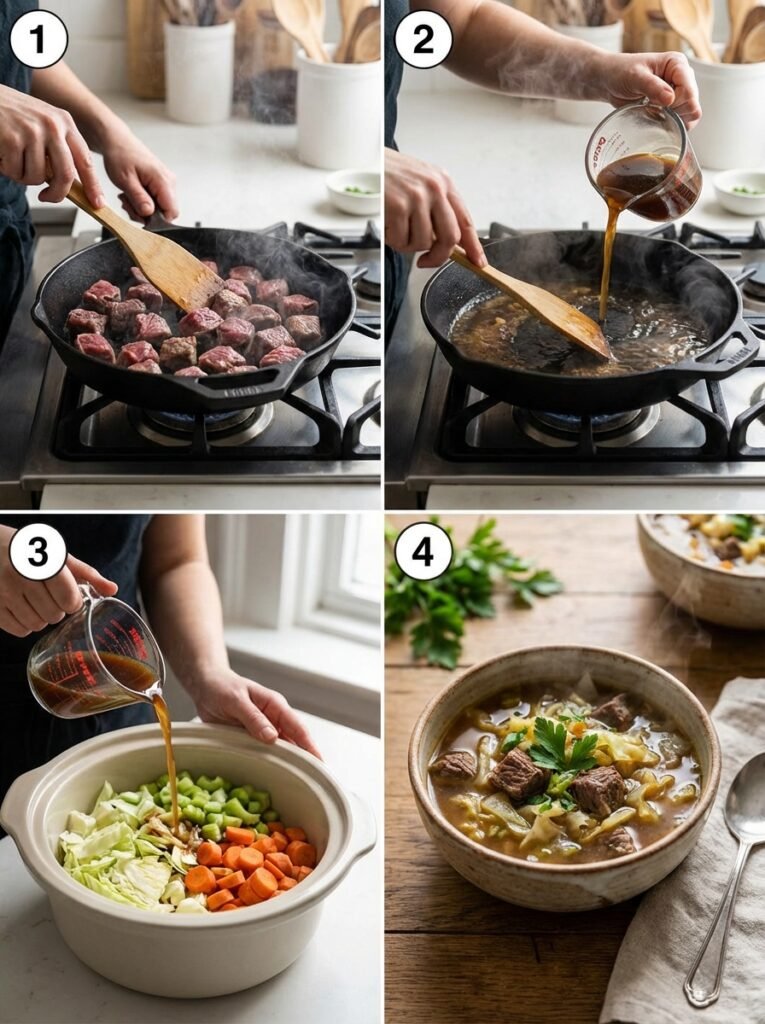
Step 1: Heat your crockpot insert and sear beef. Place your crockpot ceramic insert into the heating base and set to low temperature while you prepare ingredients. This method prevents thermal shock. Heat olive oil in a large skillet over medium-high heat until the surface shimmers with visible ripples. Working in two batches to avoid overcrowding, sear beef chuck cubes for three minutes per side until deep brown crust forms on exterior surfaces.
Step 2: Transfer seared beef to crockpot. Use a slotted spoon to transfer the seared beef directly into your heated crockpot insert, reserving approximately one-quarter cup of accumulated pan drippings in the skillet. The browning creates fond, flavorful caramelized particles that will incorporate into your broth through deglazing.
Step 3: Deglaze your skillet. Pour one cup of unsalted beef broth into your skillet, scraping the bottom vigorously with a wooden spoon to release all fond particles stuck to the pan surface. These browned bits contain concentrated beef flavor developed through the Maillard reaction. Scrape for approximately two minutes until the liquid reduces slightly and the pan bottom appears clean.
Step 4: Prepare aromatics and vegetables. Dice one large yellow onion into half-inch pieces, mince six garlic cloves finely, slice two large carrots into quarter-inch rounds, and chop three celery stalks into half-inch pieces. Rough-chop your medium head of green cabbage into two-inch pieces, removing the dense core. Keep these prepared ingredients in separate small bowls for efficient addition.
Assembly Phase
Step 5: Add aromatics to crockpot. Scatter the diced onion and minced garlic across the seared beef in your crockpot. These aromatic vegetables will soften during the extended cooking process, releasing their essential oils and flavoring the entire broth with sweet, pungent notes. Stir gently to distribute the aromatics evenly throughout the beef.
Step 6: Add carrots and celery. Layer the sliced carrots and chopped celery across the top of the onion and garlic mixture. These vegetables will maintain some structural integrity even after eight hours, providing textural contrast to the soft cabbage and tender beef. The natural enzymes in carrots and celery will begin breaking down connective tissue in the beef through enzymatic action during cooking.
Step 7: Pour in broth and deglazing liquid. Add the reserved deglazing liquid from your skillet to the crockpot along with the remaining seven cups of beef broth. Stir the mixture thoroughly, ensuring all beef cubes remain submerged beneath the liquid surface. Submerged meat cooks evenly and absorbs broth flavors uniformly throughout the eight-hour cooking period.
Step 8: Add tomatoes and seasonings. Pour one 14.5-ounce can of unsweetened crushed tomatoes into the broth, stirring to incorporate. Add three dried bay leaves, two teaspoons dried thyme, one teaspoon freshly ground black pepper, two teaspoons sea salt, and one optional low-sodium beef bouillon cube. The tomatoes add acidity that brightens heavy beef flavors while providing umami depth through concentrated tomato solids.
Cooking Phase
Step 9: Add cabbage and set cooking time. Stir in the chopped green cabbage, pushing the pieces gently beneath the broth surface with a wooden spoon. The cabbage will release moisture during cooking, contributing to the total liquid volume. Cover your crockpot with the ceramic lid and set to low temperature for eight hours, or use high temperature for four hours if time is limited.
Step 10: Monitor final hour of cooking. Approximately one hour before the cooking period ends, remove the crockpot lid and verify that cabbage has softened to your preferred tenderness and beef separates easily with a fork. If the soup appears too thin, leave uncovered for the final hour to allow some moisture evaporation. The broth should coat a spoon with visible body by the end of cooking.
Finishing Phase
Step 11: Remove bay leaves and taste. Use tongs to locate and remove all three bay leaves from the crockpot, as consuming them poses a choking hazard. Ladle a small portion of broth into a spoon, blow to cool, and taste the soup. Bay leaves impart a subtle, bitter eucalyptus note that complements beef but becomes unpleasant if consumed directly.
Step 12: Adjust seasoning to preference. Add salt and black pepper in small increments, stirring thoroughly and re-tasting after each addition. Low-sodium beef broth typically requires additional seasoning adjustment, as the crockpot’s extended cooking concentrates existing flavors but doesn’t concentrate salt. Start with one-half teaspoon salt and one-quarter teaspoon pepper, tasting before adding more.
Step 13: Ladle into serving bowls. Use a soup ladle to portion the low carb crockpot beef and cabbage soup into six wide, shallow bowls, ensuring each serving receives equal portions of beef, vegetables, and broth. Serve immediately while steam rises from the surface and the soup maintains maximum temperature.
Chef Tips for Perfect Results
- Sear beef thoroughly before adding to crockpot. The three-minute sear per side creates a flavorful brown crust through the Maillard reaction, which develops deep, complex beef flavors that single-temperature cooking cannot achieve. This step adds minimal time but dramatically improves final soup quality, creating restaurant-grade results in your home kitchen.
- Use high-quality bone broth for superior mouthfeel. Bone broth contains natural collagen that converts to gelatin during cooking, creating a silky, luxurious texture that distinguishes exceptional soup from average versions. Regular beef broth lacks this collagen content, resulting in thinner, less satisfying mouthfeel even after extended cooking times.
- Chop cabbage into two-inch pieces for ideal texture. Smaller pieces disintegrate into the broth during eight-hour cooking, while larger chunks maintain some structural integrity and provide pleasant textural variation. Two-inch pieces represent the sweet spot between texture preservation and flavor integration.
- Leave bay leaves whole and remove before serving. Whole bay leaves impart subtle flavor without overwhelming the broth, unlike crushed or powdered bay which creates an aggressive, bitter taste. Remove them completely before serving, as swallowing a whole leaf creates a serious choking hazard.
- Add salt gradually and taste multiple times before final serving. The crockpot concentrates flavors through evaporation, making early salt additions result in oversalted final soup. Add salt during the final thirty minutes of cooking to maintain precise control over sodium levels and prevent the need for dilution.
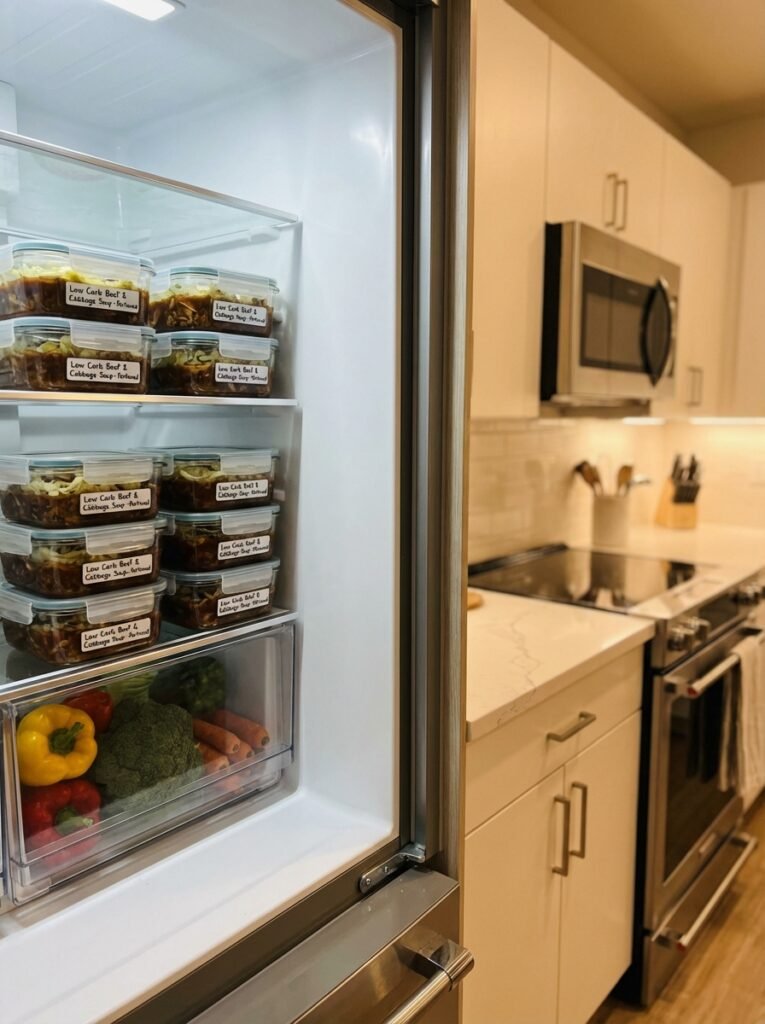
- Store portions in individual containers for convenient meal prep. Divide cooled soup into six individual containers immediately after cooking completes. This method allows you to reheat single portions in two minutes using the microwave, supporting consistent meal timing throughout your week without reheating the entire batch repeatedly.
Common Mistakes to Avoid
Mistake 1: Using lean beef cuts instead of marbled chuck. Lean beef develops a tough, stringy texture during extended cooking because it lacks sufficient intramuscular fat to maintain moisture as water evaporates. Chuck roast contains 15-20% fat content, which gelatinizes around the beef fibers, keeping them moist and tender even after eight hours of heating. If you use sirloin or round steak, your soup will contain disappointingly chewy, dry meat instead of melt-in-your-mouth tenderness.
Mistake 2: Skipping the searing step to save time. Many home cooks add raw beef directly to the crockpot to reduce active cooking time, but this approach sacrifices the deep, savory flavors that browning develops. The Maillard reaction between amino acids and sugars creates hundreds of flavor compounds impossible to develop through gentle, low-temperature cooking alone. Searing requires only fifteen additional minutes and produces measurably superior results.
Mistake 3: Using pre-cut vegetable mixes designed for stir-fries. These mixes contain vegetables cut into tiny pieces and sometimes include additives to prevent browning or moisture loss. Your crockpot soup requires larger vegetable pieces that maintain structural integrity during extended cooking and allow the broth to permeate them uniformly. Tiny, pre-cut pieces disintegrate into mush, creating a homogeneous texture lacking pleasant variation.
Mistake 4: Adding cabbage at the beginning of cooking. Cabbage cooked for eight hours becomes an indistinguishable mush that contributes bulk but not texture or visual appeal. Adding it during the final hour or hour-and-a-half preserves some structural integrity, creating pleasantly tender pieces that retain individual identity within the broth. This timing adjustment requires minimal effort but dramatically improves the final presentation.
Mistake 5: Not removing bay leaves before serving. Whole bay leaves are steeped in the broth for flavor but become increasingly bitter as cooking time extends. More critically, accidentally consuming a whole bay leaf creates a serious choking hazard due to the leaf’s pointed, rigid shape. Always use tongs to remove all three bay leaves before ladling soup into serving bowls, checking the bottom of the crockpot carefully.
Mistake 6: Covering the crockpot for the entire cooking duration. The ceramic lid traps steam inside the crockpot, reducing the broth volume through continued evaporation. If soup appears too thin, leaving the crockpot uncovered for the final hour allows excess moisture to evaporate, concentrating flavors and creating a more unctuous broth that coats your spoon with visible body. Uncover conservatively to avoid over-reducing the soup to undesirable thickness.
Variations and Substitutions
| Standard Ingredient | Substitution Option | Impact on Flavor and Nutrition |
|---|---|---|
| Green cabbage | Red cabbage or savoy cabbage | Red cabbage adds visual drama and slightly earthier sweetness; savoy cabbage provides delicate texture and milder flavor. Both maintain low carb profile at approximately 3g net carbs per cup. |
| Beef chuck roast | Beef short ribs or brisket | Short ribs offer more collagen and create gelatinous broth; brisket develops exceptional beefiness through extended cooking. Both exceed carb limits slightly but maintain keto compatibility. Choose based on personal preference for broth richness. |
| Crushed tomatoes | Tomato paste diluted in water or beef broth | Three tablespoons tomato paste diluted in one cup beef broth creates concentrated tomato flavor with greater control over acidity levels. Omitting tomatoes entirely reduces carbs by approximately 3g per serving but loses the acidic brightness that balances heavy beef. |
| Dried thyme | Fresh thyme, Italian seasoning, or oregano | Fresh thyme at 2 tablespoons provides brighter, more herbaceous notes; Italian seasoning adds complexity with basil and oregano components. Oregano emphasizes Mediterranean influence and creates earthier undertones. Adjust quantities to personal preference. |
| Yellow onion | Shallots, leeks, or garlic ramps | Shallots provide complex sweetness with subtle garlic notes; leeks offer milder onion flavor and appealing texture; garlic ramps add pungent, slightly sulfurous notes. All maintain similar carb profiles at approximately 6g net carbs per medium portion. |
| Beef bone broth | Vegetable broth, chicken broth, or homemade beef stock | Vegetable broth reduces beef flavor intensity but maintains low carb profile; chicken broth creates lighter-bodied soup with poultry undertones rather than robust beef character. Homemade beef stock requires extended preparation but offers maximum flavor control and transparency regarding ingredients. |
| Carrots | Celery root, additional cabbage, or rutabaga | Celery root provides earthy undertones with similar carb content at approximately 7g net carbs per cup; additional cabbage emphasizes vegetable elements; rutabaga adds sweet nuttiness but increases carb content slightly. Choose based on individual carb tolerance and flavor preferences. |
| Sea salt | Himalayan pink salt or kosher salt | Himalayan pink salt adds mineral complexity with trace elements; kosher salt dissolves more slowly due to larger crystals but delivers equivalent sodium content. Both provide identical nutritional impact with only subtle flavor variation. |
Serving Suggestions and Pairings
Serve low carb crockpot beef and cabbage soup as your primary dinner entree on busy weeknights, requiring only a simple green salad or side vegetables to complete your meal. The soup’s protein content supports satiety for six to eight hours, eliminating the need for evening snacking or late-night cravings that typically follow lighter dinners.
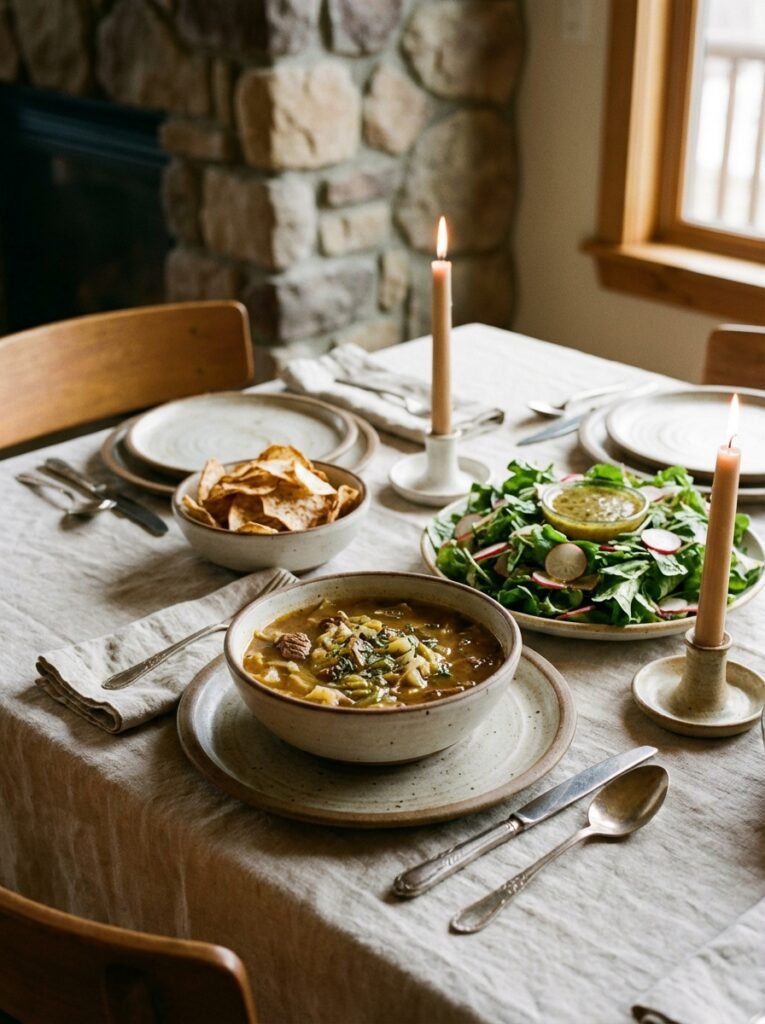
Pair this soup with crispy celery root chips seasoned with rosemary and sea salt for textural contrast and satisfying crunch. The earthy, slightly sweet celery root complements the savory beef broth beautifully while maintaining strict keto macronutrient balance. Homemade celery root chips require only thirty minutes of oven time and transform your soup experience into a restaurant-quality presentation.
Serve alongside a composed salad featuring fresh mixed greens, sliced radishes, chopped cucumber, and a simple lemon vinaigrette to introduce brightness and acidity that prevents palate fatigue from extended beef richness. The salad’s crispness provides pleasant textural variation when eaten between soup spoonfuls.
Offer topped with fresh chopped parsley and a dollop of sour cream for brunch-style entertaining, creating casual sophistication suitable for weekend meal gatherings. The parsley adds color and fresh herbaceous notes, while the sour cream creates a luxurious textural contrast against the robust broth.
Serve in mugs for easy consumption during meal prep Sundays, allowing you to sip while organizing groceries or planning your week ahead. The portable presentation makes this soup suitable for office lunches when transported in thermoses that maintain temperature for six to eight hours.
Pair with homemade beef bone broth smoothies featuring collagen powder, MCT oil, and vanilla extract for an extended fasting protocol or intermittent fasting routine. The protein-rich soup supports muscle maintenance during extended eating windows while satisfying the sensory experience of complex meal consumption.
Storage and Reheating
| Storage Method | Duration | Instructions |
|---|---|---|
| Refrigerator | 5 days | Cool soup to room temperature within two hours of cooking completion. Transfer to airtight glass containers, leaving one-inch headspace for expansion if freezing later. Store on the lowest refrigerator shelf away from ready-to-eat foods. Always use clean utensils to scoop portions, preventing cross-contamination. |
| Freezer | 3 months | Cool soup completely before transferring to freezer-safe containers or quality freezer bags, leaving one-inch headspace for expansion during freezing. Label containers with contents and date frozen for easy identification. Freeze flat in bags to save space and allow faster thawing. Use within three months for optimal flavor preservation. |
| Microwave reheating | 2-3 minutes per portion | Transfer individual portion to microwave-safe bowl, covering loosely with a paper towel to prevent splatter while allowing steam to escape. Heat on high power for two to three minutes, depending on portion size and starting temperature. Stir halfway through heating to distribute warmth evenly and prevent hot spots that scald your mouth. |
| Stovetop reheating | 5-7 minutes for full batch | Transfer soup to a medium saucepan, adding one-quarter cup beef broth per quart of soup to compensate for evaporation during previous cooking. Heat over medium heat, stirring occasionally, until small bubbles break the surface continuously. Avoid vigorous boiling, which toughens beef fibers through aggressive agitation. Serve immediately. |
| Instant Pot reheating | 4-6 minutes total time | Transfer frozen or refrigerated soup to Instant Pot, adding one-quarter cup beef broth. Seal lid and set to high pressure for four minutes if refrigerated or six minutes if frozen. Use quick pressure release method to prevent soup from continuing to cook after the timer completes. |
| Slow cooker reheating | 1-2 hours on low | Transfer soup to crockpot insert and set to low temperature, allowing it to warm gently without active cooking. This method works exceptionally well when reheating multiple portions or preparing soup several hours ahead of serving. Soup maintains optimal texture and flavor through slow, gentle reheating. |
Nutritional Information
Approximate values per serving (one-sixth of recipe):
| Nutrient | Amount per Serving |
|---|---|
| Calories | 285 |
| Total Fat | 16g |
| Saturated Fat | 6.5g |
| Monounsaturated Fat | 6.2g |
| Polyunsaturated Fat | 2.1g |
| Cholesterol | 72mg |
| Protein | 32g |
| Total Carbohydrates | 11g |
| Dietary Fiber | 3g |
| Net Carbohydrates | 8g |
| Sugar | 4g |
| Sodium | 650mg |
| Potassium | 485mg |
| Magnesium | 32mg |
| Iron | 2.8mg |
| Zinc | 6.2mg |
Nutritional notes: These approximate values are calculated based on standard USDA ingredient databases and may vary slightly depending on specific brands used and individual preparation methods. The eight grams of net carbohydrates per serving falls well within standard ketogenic diet macronutrient targets of 20-30g daily net carbs. The 32 grams of complete protein supports muscle maintenance and provides satiety that extends from lunch through dinner without snacking. The recipe contains no added sugars, flour, thickeners, or artificial ingredients, delivering clean, whole-food nutrition appropriate for various dietary protocols including paleo, Whole30, and carnivore diets.
Frequently Asked Questions
Can I make low carb crockpot beef and cabbage soup on high temperature instead of low?
Yes, you can absolutely prepare this soup on high temperature for approximately four hours instead of eight hours on low, producing equally delicious results with slightly less flavor complexity development. The extended low-temperature method allows more gentle collagen breakdown and deeper Maillard flavor development through extended cooking, but the four-hour high-temperature method delivers satisfactory results for time-constrained schedules. Set your crockpot to high and check beef tenderness after three-and-a-half hours, allowing additional time if necessary until beef separates easily with a fork.
How do I know when the beef is finished cooking in my crockpot?
The beef reaches proper doneness when you can easily separate a piece using only a fork without resistance, and the meat has transformed from pink to gray-brown throughout its interior. Pierce a piece of beef with a fork and gently pull the meat apart; properly cooked beef for this soup should separate immediately without requiring force or pressure. If the beef still resists gentle fork pressure after eight hours on low temperature, the cooking time was insufficient or your crockpot may run cold relative to temperature settings.
Can I substitute beef bone broth with regular chicken broth for this recipe?
Chicken broth creates a noticeably lighter, less robust soup with poultry flavors competing against the beef’s beef character, resulting in confused flavor profile rather than unified complexity. While the soup remains technically palatable with chicken broth substitution, the final product lacks the deep, satisfying umami quality that beef bone broth provides through collagen content and concentrated beef flavors. If you must use chicken broth, use beef broth for at least half the liquid volume to maintain adequate beef presence.
Why does my soup taste too salty, and can I fix it after cooking completes?
Crockpot cooking concentrates existing salt content through evaporation, meaning early salt additions and pre-salted broths often result in oversalted final soup. If your soup exceeds your preferred saltiness level, add diced potatoes, additional unsalted broth, or diced raw carrots to dilute sodium concentration while maintaining flavor complexity. The potatoes absorb excess salt through osmosis while softening, then you can either leave them in the soup or remove them after the salt absorption occurs. Alternatively, serve your soup in smaller portions and supplement with unsalted broth at the table.
Can I prepare low carb crockpot beef and cabbage soup using ground beef instead of chuck roast?
Ground beef creates an entirely different soup texture with fine, granular beef particles suspended throughout the broth rather than tender, melt-in-your-mouth chunks that provide visual appeal and satisfying textural contrast. While technically possible to use ground beef, the resulting soup resembles beef stew rather than traditional beef and cabbage soup, lacking the premium presentation and eating experience that whole beef chunks deliver. If you choose ground beef, brown it thoroughly in a skillet before adding to the crockpot to develop color and texture.
How can I make this low carb crockpot beef and cabbage soup even more protein-rich for bodybuilding or muscle-building goals?
Add an additional 12-16 ounces of beef chuck roast to increase protein content from 32 grams to approximately 40 grams per serving while maintaining acceptable net carb totals around 8 grams. Alternatively, stir in one scoop of unflavored beef protein powder or collagen peptides during the final minutes of cooking, dissolving completely into the broth to boost protein content without creating chunky texture or separating issues. The additional protein supports muscle protein synthesis following strength training while the soup’s satiety remains exceptional.
What should I do if I forgot to remove the bay leaves before serving?
If you accidentally consumed a bay leaf fragment, swallow slowly and drink water to help it progress down your esophagus, as bay leaves typically pass through your digestive system without issue despite their rigid texture. If a whole bay leaf is lodged in your throat causing discomfort, do not attempt forced removal; instead, go to emergency services immediately for professional removal under proper lighting and equipment. For future batches, mark your calendar with a phone reminder to remove bay leaves one hour before serving, or place them in a mesh infuser ball that can be easily located and removed.
Can I make low carb crockpot beef and cabbage soup completely keto-compliant by omitting the carrots and tomatoes?
Omitting carrots and tomatoes reduces net carb content from eight grams to approximately five grams per serving, which remains well within strict ketogenic targets but reduces flavor complexity and visual appeal through decreased vegetable variety. Carrots contribute subtle sweetness that balances beef richness, while tomatoes provide acidity and umami depth that rounds out the overall flavor profile. If stricter carb limits are necessary, reduce carrots to one medium carrot and reduce tomatoes to seven ounces while maintaining soup quality and flavor complexity.
How long do leftovers remain safe to eat if I leave the low carb crockpot beef and cabbage soup on the warm setting overnight?
Leaving cooked soup on a crockpot’s warm setting for more than two hours after initial cooking completion creates food safety risks through insufficient temperature maintenance to prevent bacterial growth, even though the warm setting prevents soup from cooling. Food safety guidelines recommend consuming cooked soup within two hours at room temperature or transferring to refrigerator immediately after cooling to 40 degrees Fahrenheit. If you need soup available several hours after cooking, transfer it to the refrigerator and reheat portions as needed rather than maintaining it on the warm setting.
Can low carb crockpot beef and cabbage soup be used as a fasting-friendly meal for intermittent fasting protocols?
This soup serves as an excellent meal during eating windows for intermittent fasting due to exceptional macronutrient balance and high satiety value, with 32 grams of protein and adequate fat content preventing rapid blood sugar fluctuations. The eight grams of net carbs create minimal metabolic disruption, maintaining ketone production even after consumption. However, the soup’s broth-based nature and collagen content make it unsuitable as a complete fasting meal because any calories technically break a strict fast, though bone broth fasting protocols specifically allow this type of preparation.
Conclusion
Low carb crockpot beef and cabbage soup delivers exceptional satisfaction and nutritional value through the powerful combination of grass-fed beef chuck, cruciferous cabbage, and aromatic vegetables unified in rich, restorative broth. This recipe represents the ultimate convenience food for busy professionals, meal preppers, and anyone seeking substantial dinners that support ketogenic macronutrients without requiring extensive active cooking time. The eight-hour low-temperature cooking method transforms inexpensive beef into melt-in-your-mouth tenderness while developing complex umami flavors that rival restaurant-quality soups prepared by professional chefs with specialized equipment.
The soup’s versatility accommodates various dietary protocols including keto, paleo, carnivore, and Whole30 approaches, making it an exceptional choice for households managing multiple nutritional preferences simultaneously. Each batch yields six generous servings suitable for meal prep throughout your week, eliminating the need for complicated dinner planning or last-minute restaurant visits that derail consistent nutrition adherence. The cost per serving remains remarkably low despite premium beef chuck prices, delivering exceptional nutritional value compared to processed convenience foods or restaurant meals of equivalent quality.
This low carb crockpot beef and cabbage soup’s savory beef broth, tender vegetables, and luxurious collagen-enriched texture create the ultimate comfort dining experience that supports your health goals while satisfying deeply ingrained desires for warming, nourishing food. Prepare a batch this weekend and experience why this recipe has become a beloved staple in homes dedicated to sustainable, nutritious eating practices.
Internal Link Placeholders:
- Best keto-friendly crockpot recipes for busy weeknights
- Complete guide to meal prep containers for soup storage
- Comprehensive beef broth comparison guide for soup cooking
- Essential crockpot troubleshooting tips and solutions
- Low carb vegetable substitutions for traditional soup recipes
External Authority Links:
Print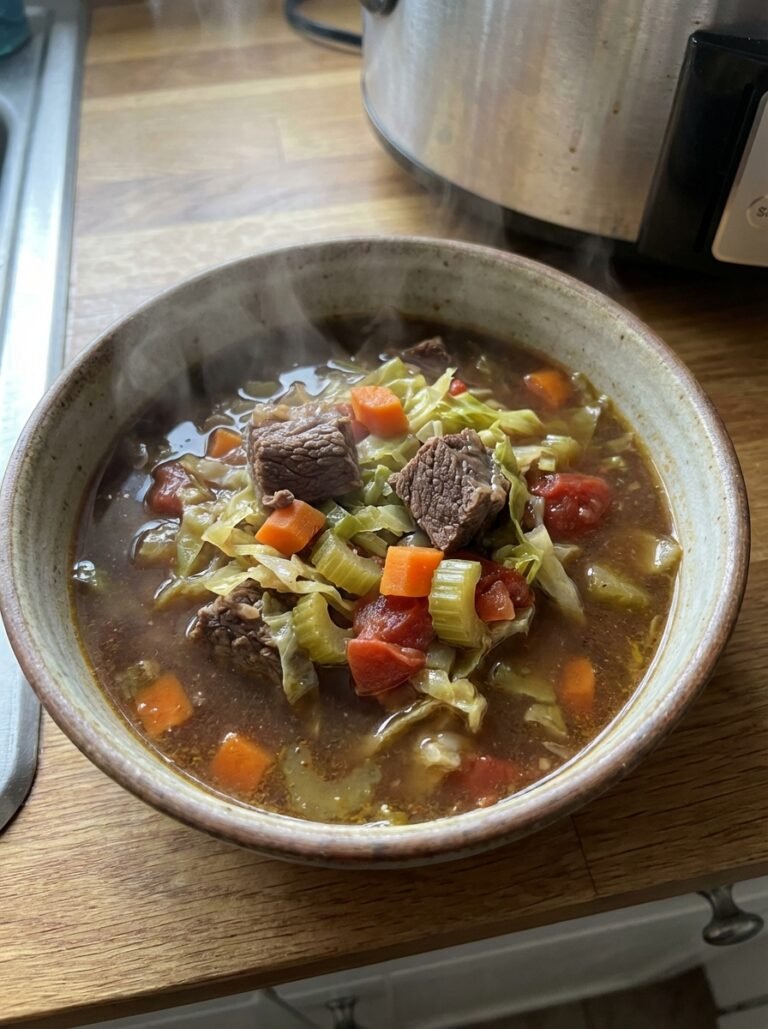
Low Carb Crockpot Beef and Cabbage Soup
A nourishing, slow-cooked soup combining tender beef chuck, cabbage, and aromatic vegetables in a savory broth. Perfect for low-carb diets with less than 8g net carbs per serving. Ideal for busy weeknights or meal prepping.
- Total Time: 495
- Yield: 6 servings 1x
Ingredients
1.5 lbs beef chuck (cut into 1-inch cubes)
1 small head green cabbage (shredded)
1 medium onion (diced)
3 cloves garlic (minced)
2 medium carrots (sliced)
2 celery stalks (sliced)
1 can diced tomatoes (no salt added)
4 cups beef broth (low sodium)
2 bay leaves
1 tsp dried thyme
1 tsp salt (adjust to taste)
1/2 tsp black pepper
Instructions
Brown beef chuck in a skillet over medium heat; drain excess fat.
Place browned beef, cabbage, onion, garlic, carrots, celery, tomatoes, beef broth, bay leaves, thyme, salt, and pepper in the crockpot.
Cover and cook on low for 8 hours.
Before serving, remove bay leaves and adjust seasoning if needed.
Stir in fresh parsley (optional).
Notes
For extra richness, add 1/2 cup unsalted beef gelatin before cooking.
Serve with chopped fresh parsley or Parmesan cheese if desired.
Store leftovers in an airtight container in the refrigerator for up to 5 days.
Increase cabbage quantity for a lighter beef flavor.
- Prep Time: 15
- Cook Time: 480
- Category: Dinner
- Method: Slow Cooking
- Cuisine: American comfort food with European influences
- Diet: Low Carb
Nutrition
- Serving Size: 1 bowl (about 16 oz)
- Calories: 340
- Sugar: 4g
- Sodium: 600mg
- Fat: 20g
- Saturated Fat: 7g
- Carbohydrates: 10g
- Fiber: 2g
- Protein: 32g
- Cholesterol: 90mg