Did you know that a single “regular” cupcake can pack over 50 grams of sugar? That is enough to make my head spin faster than a middle schooler on a Friday afternoon! I have been teaching for a long time, and let me tell you, I’ve seen my fair share of sugar crashes in the classroom. When I started my own low carb journey, I thought my days of enjoying a moist, tender vanilla cupcake were gone for good. I was wrong.
After a few “cupcake-shaped rocks” came out of my oven, I finally found the secret. These low carb vanilla cupcakes with buttercream are light, airy, and don’t have that weird aftertaste some keto treats do. They are the perfect treat for bake sales or just a quiet Tuesday night when you need a win.
The Secret to Fluffy Keto Cake Bases
I remember the first time I tried making low carb cupcakes. They looked more like flat pancakes than actual cake! It took me a lot of tries in my kitchen to figure out how to get that fluffy texture we all love. In my classroom, I always tell my students that the right tools and ingredients make all the difference, and it is the same for baking.
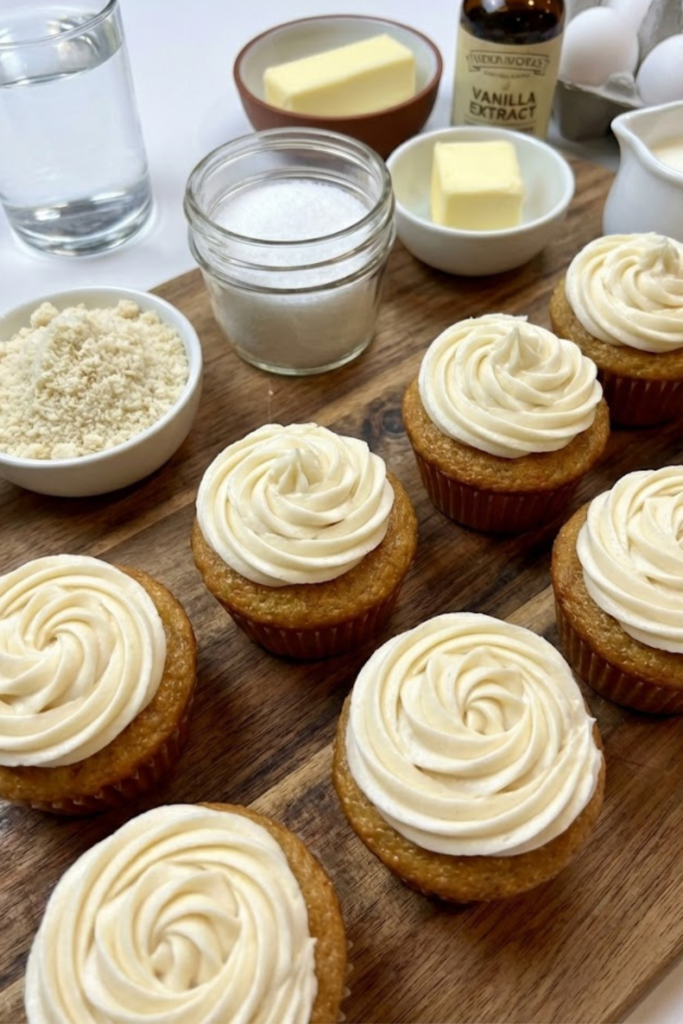
For these cupcakes, you really need to use extra-fine almond flour. I tried coconut flour before, but it usually makes things way too dry and crumbly. Almond flour gives it that traditional crumb that makes you feel like you are eating a “real” cupcake. Just make sure it’s the fine kind, or your cake might feel a bit grainy.
Another thing I learned the hard way is the “Room Temp” Rule. One Saturday, I was in a rush and used cold eggs straight from the fridge. Big mistake. The butter clumped up immediately, and the batter looked like a curdled mess. Now, I always leave my eggs and butter out for at least an hour. If you are in a hurry, you can put the eggs in a bowl of warm water for a few minutes. It really helps everything mix together smooth.
Finally, don’t skip the xanthan gum. I know it sounds like a weird science experiment, but just a tiny pinch acts like glue. Since we aren’t using wheat flour, we need something to hold it all together so it doesn’t fall apart when you take a bite. Combine that with a good amount of baking powder, and you will get a nice rise every time. It is a simple trick that makes a huge difference in how the cake feels.

Silky Smooth Low Carb Buttercream That Actually Pipes
I used to think that making a sugar-free frosting that actually tasted good was impossible. Most of the time, it ended up feeling like I was eating sand! That is because regular keto sweeteners do not melt into butter like normal sugar does. It can be very frustrating when you want a treat but it feels gritty in your mouth.
After trying a bunch of different brands, I found that using powdered erythritol or allulose is the best way to go. If you only have the grainy kind in your pantry, you can just throw it in a blender for a minute to turn it into powder. It makes the buttercream way smoother. I like allulose because it does not have that cold aftertaste, but either one works if you make it into a fine powder first.
The temperature of your butter is the biggest deal here. If your butter is too cold, you get chunks. If it is too melted, you get a yellow soup. You want it just soft enough that your finger leaves a dent when you press it. I usually beat the butter by itself for a few minutes before adding anything else. This makes it really pale and fluffy, which is exactly what we want for a professional look.
If your frosting still looks a little too yellow and you want that bright white bakery look, here is a little teacher trick I learned: add the tiniest drop of purple food coloring. I mean just a tiny speck on the end of a toothpick! The purple cancels out the yellow tones and makes the frosting look like snowy white vanilla. I also suggest using a paddle attachment on your mixer instead of a whisk. A whisk adds way too much air, and then you get those little bubbles that make it hard to get a smooth pipe. If you do see air bubbles, just use a spatula to stir the frosting by hand for a minute to “smush” the air out against the side of the bowl. It’s a bit of a workout for your arm, but it makes the final result look so much better. Also, don’t forget to scrape the bottom of the bowl a few times while mixing. I once missed a spot and ended up with a huge clump of plain butter on top of a cupcake—my family thought it was pretty funny, but I was a bit annoyed!
To give it that bakery finish, I always add a splash of heavy cream and a good amount of vanilla. It makes the frosting rich and easy to squeeze through a piping bag. If it is too thick, add a tiny bit more cream. If it is too thin, put it in the fridge for ten minutes. It is a lot like managing a classroom—you have to fix things as you go to keep everything from falling apart!

Common Baking Blunders (And How I Fixed Them)
Baking is a lot like a lesson plan that goes off the rails—you just have to learn from it and try again. I’ve had plenty of “cupcake fails” in my day before I finally got this recipe to work. If your cupcakes don’t look perfect the first time, don’t sweat it! Even after years of teaching, I still make mistakes in my own kitchen.
One of the biggest mysteries I had to solve was the “Sinking Center.” My cupcakes would look great in the oven, but then they would cave in as soon as I pulled them out. It was so frustrating! I eventually realized I was beating the batter too much. When you whip too much air into keto batter, it rises too fast and then collapses since there isn’t any gluten to hold it up. Now, I just mix until the flour disappears and then I stop.
Dryness is another thing that can ruin your day. Almond flour usually stays moist, but if you leave these in the oven for even two minutes too long, they get really crumbly. I always start checking them with a toothpick about five minutes before the timer is supposed to go off. You want to see a few moist crumbs on the toothpick. If it comes out totally clean, they might be getting too dry.
I also used to have issues with lumps in my batter that just wouldn’t go away. I thought I could just stir them out with a spoon, but almond flour can be pretty stubborn. Now, I always take a second to sift the flour through a mesh strainer first. It’s an extra step, kind of like double-checking my students’ names on their report cards, but it makes the final cupcake feel so much smoother.
Another thing I noticed is that if you use baking powder that has been sitting in your kitchen cupboard for years, your cupcakes will stay flat. I always check the date on the box now because I want my cakes to actually grow while they are in the oven! Also, don’t fill the liners all the way to the top. I did that once and the batter spilled over the edges, making a sticky mess on my pan that took forever to clean up. Just aim for about two-thirds or three-quarters full, and they will turn out just right.
My last tip is about patience, which I know is hard when the whole house smells like a bakery. You have to let them cool all the way. One time I was in a big rush after school and tried to frost them while they were still a bit warm. The buttercream melted and slid right off onto the counter! It was a giant mess. Give them at least an hour to sit so the frosting stays right where it belongs.

I really hope you give these low carb vanilla cupcakes with buttercream a try. They really changed things for me when I was looking for a sweet treat that wouldn’t make me feel tired or sluggish during the school day. Making the switch to almond flour and sugar-free sweeteners can be a little bit of a learning curve, but its totally worth it when you take that first bite of a fluffy cupcake.
If you decide to bake these, I would love to hear how they turned out! Did you use allulose or erythritol? Did your family even notice they were low carb? Let me know in the comments. Also, if you found this helpful, please take a second to pin this to your Pinterest boards. It helps more people find these healthy recipes, and it helps me keep sharing my baking adventures with you all. Happy baking!