Can you believe a traditional bakery cinnamon roll often packs over 100 grams of carbs? It’s shocking! But listen, I have great news for you. You absolutely do not have to give up your favorite gooey, warm breakfast treat just because you are living a low-carb lifestyle. These keto cinnamon rolls with fathead dough are a total game-changer. They are soft. They are chewy. And they are completely sugar-free! I remember the first time I made these; I was terrified the mozzarella cheese would make them taste savory. I was wrong. They taste just like the real thing, and I can’t wait for you to try them!

Why Fathead Dough is the Holy Grail of Low Carb Baking
I still remember the first time I heard about putting mozzarella cheese in a dessert. I was standing in my kitchen, staring at a bag of shredded cheese, thinking, “There is absolutely no way this is going to taste good.” It sounded gross, to be honest. I had been on keto for about three weeks and was craving bread so bad I was ready to cry. But I decided to trust the process.
I threw the cheese in the bowl, melted it down, and that was the moment everything changed for me. Fathead dough isn’t just a substitute; it is the backbone of almost every good low carb baked good I make now. It’s the only thing that saves me when I need comfort food.
The Gluten Fake-Out
Here is the thing about baking without wheat: you lose the gluten. Gluten is the glue that makes bread chewy and stretchy. Without it, most almond flour recipes just crumble into a pile of sad dust.
This is where the fathead dough comes in to save the day. When you melt mozzarella and combine it with cream cheese and egg, the proteins line up in a way that mimics gluten. It gives you that pull-apart texture that is usually impossible to get on a low carb diet.
It’s weird science, but it works. The cheese acts as the binder that holds the almond flour together. This allows the yeast or baking powder to do its job and fluff up the rolls.
My First Disaster (And How to Avoid It)
I have to be real with you, my first batch was a total mess. I used fresh mozzarella—the fancy kind that comes in a ball of water. Big mistake.
The dough was a wet, soupy nightmare that wouldn’t hold a shape. I tried to roll it out and it just stuck to everything. I ended up scraping it off the counter and eating it with a spoon (don’t judge me).
You need to use low-moisture, part-skim mozzarella. Pre-shredded is fine, but I prefer to buy a block of low-moisture mozz and shred it myself. The pre-shredded stuff sometimes has potato starch on it to keep it from clumping, which adds sneaky carbs.
Does It Taste Like Pizza?
This is the question I get asked every single time I serve these keto cinnamon rolls. People are terrified it’s going to taste like a pepperoni pizza with cinnamon on it.
I promise you, it does not.
Once you mix in the almond flour, the sweetener, and especially the vanilla extract, the cheese flavor completely disappears. The mozzarella is a blank canvas. It takes on whatever flavor profile you give it.
I have fooled my non-keto family members with this dough a dozen times. They eat it, tell me how good it is, and then their jaws drop when I tell them the main ingredient is cheese. It’s my favorite party trick.
Why Almond Flour Matters
You might be tempted to swap flours, but stick with almond flour for this. I’ve tried coconut flour, and it absorbs way too much moisture. The rolls came out dry and hard as a rock.
Almond flour gives the fathead dough a richer, cake-like crumb. It’s closer to a traditional brioche dough than anything else I’ve found. Just make sure you get the “superfine” kind.
If you use coarse almond meal, you’ll feel the grit in your teeth. Nobody wants gritty cinnamon rolls. Spending the extra couple of bucks for the good flour makes a huge difference in the final texture.
I’ve learned the hard way that you can’t rush this dough. You have to let the cheese melt fully before mixing, or you get lumps. But once you master it, this dough opens up a whole world of baking that you thought was off-limits.
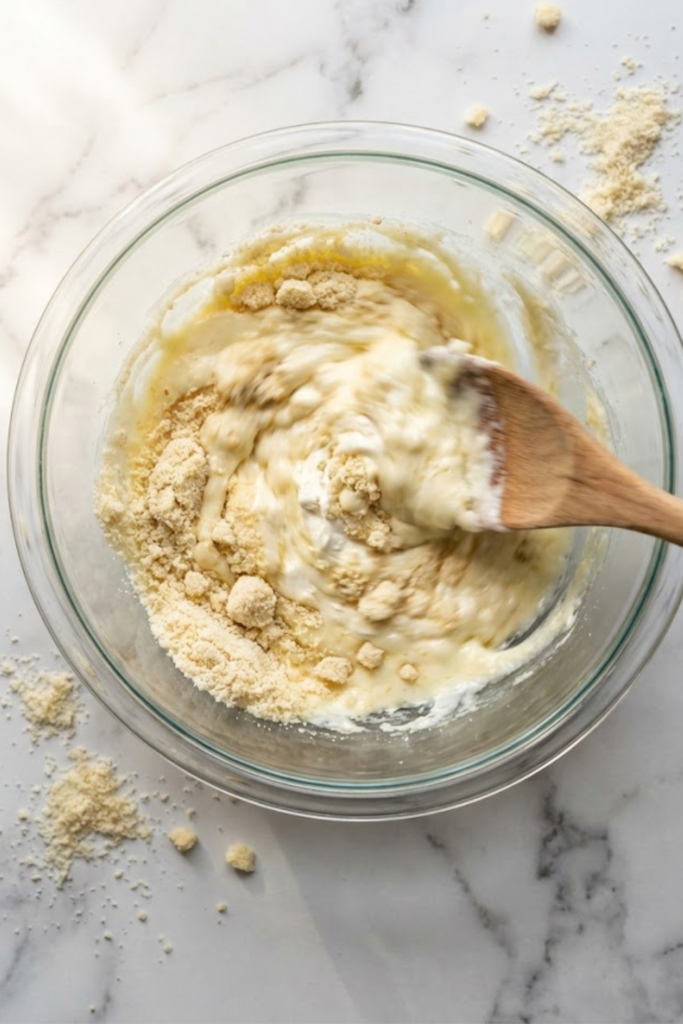
Mastering the Dough: Melting and Mixing Techniques
Getting this dough right can be a little tricky the first time you try it. It is not like regular flour where you just dump everything in a bowl and stir. You are working with melted cheese, and let me tell you, it has a mind of its own.
I’ve ruined enough batches to know exactly what can go wrong, so follow these steps and you will be fine.
The Microwave Dance
I always use the microwave. It is just faster than messing with a double boiler on the stove. But you can’t just set it for two minutes and walk away. The cheese will burn or separate, and then you have to throw it out.
Put your mozzarella and cream cheese in a microwave-safe bowl. Heat it on high for exactly 60 seconds.
Take it out and give it a stir. It will look stringy and barely melted. That is normal.
Put it back in for another 30 seconds. Now when you stir it, it should come together in a smooth ball. If there are still shreds of cheese visible, do another 10 seconds. You want it smooth, almost like a thick slime.
Don’t Scramble Your Egg
This is the most common mistake I see beginners make. You pull that hot cheese out of the microwave and immediately crack an egg into it.
Stop!
If you do that, the heat from the cheese cooks the egg whites instantly. Then you end up with weird white chunks of cooked egg in your cinnamon rolls. It is gross.
I like to mix my almond flour, sweetener, and baking powder into the hot cheese first. This cools the mixture down just enough. Once the flour is worked in a bit, then I add the room temperature egg. It mixes in way better.
It’s Going to Be Sticky
There is a point where you will think you messed up because the dough is sticking to your spoon, the bowl, and your fingers.
Don’t panic. This is just how fathead dough is.
If it is too sticky to handle, put a little bit of oil on your hands. I usually just rub some avocado oil or even butter on my palms. It helps a ton.
You need to knead it with your hands until it is one solid color. If you see streaks of white almond flour or yellow egg yolk, keep kneading. It usually takes me about two minutes of squeezing and folding to get it right.
Teacher Tip: If the dough gets hard and stiff while you are trying to mix it, just pop it back in the microwave for 10 seconds. It softens right back up and becomes pliable again. Don’t fight with cold dough!

Creating the Perfect Sugar-Free Cinnamon Filling
Once your dough is ready, you have to move fast. You don’t want that cheese to cool down too much before you get the filling on. This is the part that makes your house smell like a professional bakery, and honestly, it’s my favorite part of the whole process.
Choosing Your Sweetener
When it comes to the filling, not all sweeteners are created equal. I’ve tried them all. If you use a straight erythritol, you might get that weird “cooling” sensation in the back of your throat. It feels like you’re eating a minty cinnamon roll, and let me tell you, it’s not great.
I prefer using a brown sugar replacement. There are a few brands out there that mix erythritol with monk fruit or a little molasses extract. It gives you that deep, caramel-like flavor that you need for a real cinnamon roll. If you can’t find that, a powdered sweetener works better than a granular one because it dissolves into the butter faster and doesn’t stay crunchy.
The Butter Texture Trick
I used to melt my butter and pour it onto the dough, but that was a huge mistake. The butter just runs everywhere, carries the cinnamon with it, and makes a giant mess on your counter.
Instead, use very soft, room-temperature butter. It should be the consistency of toothpaste. Spread it gently over the dough with the back of a spoon or a rubber spatula. Since the fathead dough is a little delicate, you don’t want to press too hard or you’ll tear it.
Don’t Skimp on the Cinnamon
I’m a bit of a cinnamon snob. If you’re using that dusty old jar that’s been in the back of your cabinet since 2019, stop right now. Go buy a fresh jar of Saigon cinnamon. It has a much higher oil content and a stronger “zing” to it.
I usually use about two tablespoons for one batch. It seems like a lot, but remember, the dough itself isn’t very sweet, so the filling has to do the heavy lifting. I also like to add a tiny pinch of salt to the cinnamon mix. It sounds weird, but it actually makes the sweetness pop.
Adding Some Crunch
If you want to take these to the next level, I highly recommend throwing in some finely chopped pecans. I started doing this because I missed the texture of traditional rolls. The nuts get toasted while the rolls bake, and the healthy fats keep you full for hours. Just make sure you chop them small so they don’t poke holes through your dough when you start rolling it up.
Rolling, Cutting, and Baking for Maximum Fluffiness
Now comes the part where things can get a little messy if you aren’t prepared. Fathead dough is notorious for being sticky, and if you try to roll it out directly on your counter, you’re going to have a bad time. I’ve spent way too many mornings scraping dough off my granite with a spatula to make that mistake again.
The Parchment Paper Sandwich
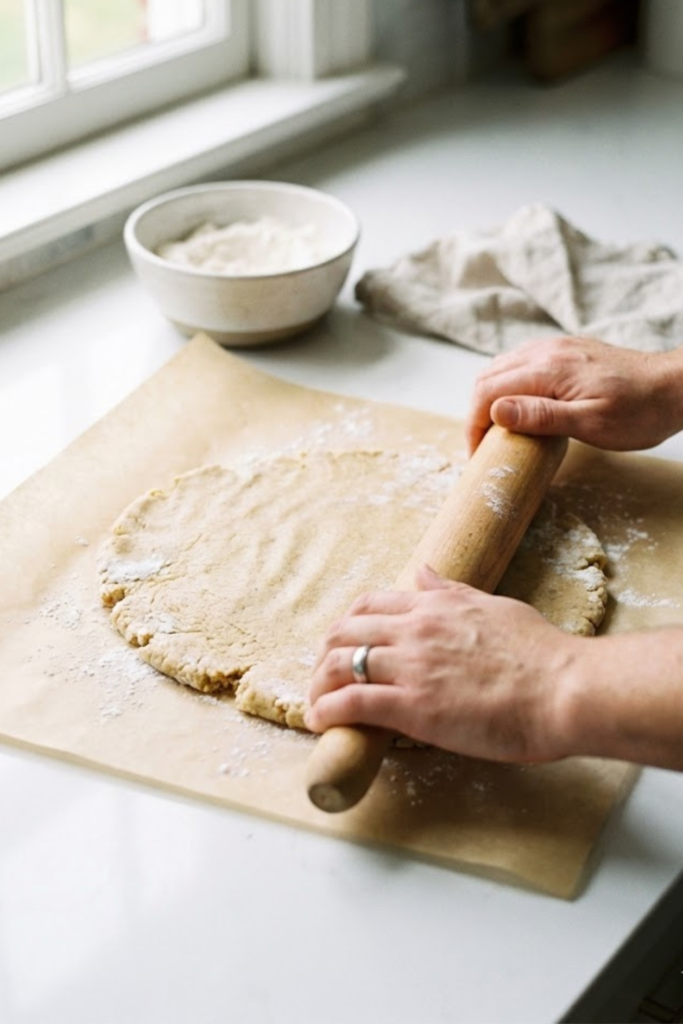
The secret to a perfect roll-up is using two sheets of parchment paper. Put your dough ball on one sheet, flatten it out a bit with your hand, and then put the second sheet on top. Use your rolling pin to roll it into a large rectangle.
You want it to be about a quarter-inch thick. If you roll it too thin, the dough will tear when you try to roll it up. If it’s too thick, you won’t get those beautiful spirals, and the center might stay doughy. Once it’s rolled out, peel off the top layer of parchment carefully. If the dough starts to lift with the paper, just press it back down and try peeling from a different corner.
The Dental Floss Hack
This is the best tip I ever learned from an old baking blog, and it works even better for keto dough. Because fathead dough is soft, using a knife usually squishes the roll flat. You end up with oval-shaped blobs instead of pretty circles.
Grab a piece of unflavored dental floss (seriously, make sure it’s not minty!). Slide the floss under the long log of dough, cross it over the top, and pull quickly. It slices through the dough perfectly without putting any pressure on the top. It’s so satisfying to watch!
Give Them Some Space
When you put your rolls into the baking dish, don’t cram them in. They need a little room to breathe so the heat can circulate. I usually leave about half an inch between each roll. As they bake, they will expand and eventually touch, which is what keeps the sides soft and fluffy.
If you like “center pieces”—you know, the rolls that are soft all the way around—use a smaller pan so they all touch. If you like crispy edges, use a larger baking sheet.
Watch the Bottoms
Almond flour burns much faster than regular wheat flour. I always bake mine on the middle rack. If you put them too low, the cheese in the dough will fry against the bottom of the pan and turn bitter before the middle is even cooked.
Check them at the 15-minute mark. They should be a light golden brown. If they look like they are browning too fast but the dough still feels “squishy” in the center, just lay a piece of tin foil loosely over the top for the last five minutes. This protects the tops while the middle finishes setting up.

The Ultimate Cream Cheese Icing Finisher
No cinnamon roll is complete without a thick layer of frosting melting into the cracks. Since these are keto cinnamon rolls, we aren’t using powdered sugar, but honestly, this cream cheese icing is so good I’ve caught myself eating it with a spoon right out of the bowl.
Soft Cheese is a Must
I cannot stress this enough: your cream cheese has to be at room temperature. If you try to whisk cold cream cheese, you will end up with tiny white lumps that never go away, no matter how hard you stir. It makes the icing look curdled and unappetizing.
I usually take my cream cheese out of the fridge the second I start making the dough. By the time the rolls come out of the oven, it’s soft enough to whip into a smooth, velvety cloud. If you forgot to take it out, you can microwave it for about 15 seconds, just be careful not to melt it into a liquid.
Getting the Right Drip
Everyone has a different preference for icing. Some people like a thick frosting that sits on top like a hat, and some like a thin glaze that soaks into the bread.
I start by mixing the soft cream cheese with a little powdered sweetener and a splash of vanilla. Then, I add heavy whipping cream one tablespoon at a time. If you want it thick, stop at one tablespoon. If you want that classic “Cinnabon” look where the icing drips down the sides, add two or three tablespoons.
The Flavor Secret
If you want these to taste like they came from a high-end bakery, add a tiny drop of maple extract or a squeeze of fresh lemon juice to the frosting. The maple makes them taste extra “breakfasty,” while the lemon juice cuts through the richness of the cheese and makes the whole thing taste lighter.
Timing Your Frosting
There is a sweet spot for when to apply the icing. If you do it the second they come out of the oven, the icing will turn into an oily puddle. If you wait until they are completely cold, the icing just sits there and doesn’t bond with the roll.
Wait about five to ten minutes. The rolls should still be warm to the touch, but not piping hot. This way, the bottom layer of the icing melts slightly into the cinnamon swirls, while the top layer stays thick and creamy. It’s the best of both worlds.

There you have it! These keto cinnamon rolls with fathead dough are the perfect way to feel like you’re having a “cheat meal” without actually breaking your diet. It took me a few tries to get the hang of working with cheese dough, but once you do, you’ll never go back to those dry, cardboard-tasting keto breads again. These are gooey, sweet, and totally satisfying.
If you enjoyed this recipe and want to help others find a delicious low-carb breakfast, please pin this recipe on Pinterest! It helps me out a lot and lets more people know that keto doesn’t have to be boring. Happy baking!