I could never give up pasta!” That’s what I said right before I started keto. And honestly? The hardest part wasn’t the noodles; it was the breaded chicken! We all crave that crunch. Did you know that nearly 90% of diet “fails” happen because people feel deprived of their favorite comfort foods? That’s huge! But here is the good news.
I have spent years perfecting this. You don’t have to say goodbye to Italian night. This keto chicken parmesan with almond flour is going to change your life. It is juicy. It is crispy. It is cheesy heaven on a plate! We are going to use almond flour to get that perfect golden crust without the heavy carbs. Let’s get cooking!

Mastering the Keto Breading Station
I have to be honest with you—my first attempt at keto chicken parmesan with almond flour was a total disaster. I stood there looking at a skillet full of burnt crumbs while my naked chicken breast mocked me from the plate. It was frustrating! I almost threw in the towel and ordered a pizza. But I didn’t. I realized that breading without gluten is a whole different ballgame. It’s tricky, but once you get the hang of it, you’ll never go back.
Pick the Right Flour (Please!)
Here is the biggest mistake I see people make. They grab just any bag of almonds. Do not use almond meal. Just don’t do it. Almond meal is ground with the skins on, and it makes your chicken taste gritty, kinda like you dropped it in the sand at the beach.
You need super-fine blanched almond flour. That is the stuff where the skins are removed and it’s ground down into a soft powder. It mimics white flour way better. I learned this the hard way after serving a “crunchy” dinner that was crunchy for all the wrong reasons. The super-fine texture allows the heat to distribute evenly so you get a golden crust, not burnt bits.
The Parmesan Ratio
Now, almond flour on its own? It’s okay, but it’s a little sweet. It doesn’t scream “Italian dinner.” That is why you have to cut it with cheese. I like to use a 50/50 mix or sometimes a little more flour than cheese.
Mix grated parmesan cheese directly into your flour bowl. And I’m talking about the powdery kind or finely grated stuff, not the big shreds you put on a salad. The cheese melts and crisps up at the same time as the flour cooks. It creates this savory, salty shield around the chicken that locks in the juices. It is seriously a game changer for flavor.
Seasoning the Mix
If you think the sauce will add enough flavor, you are wrong. I’ve made that mistake too many times. You have to season every single layer of your food. I toss a heavy tablespoon of Italian seasoning, plenty of garlic powder, and a pinch of salt right into the almond flour mixture.
If you skip this, your breading just tastes like toasted nuts. Which is fine for a cookie, but weird for chicken parm. Taste your flour mix (just a tiny pinch). Does it taste good? If not, add more garlic powder.
The Egg Wash Technique
Okay, let’s talk about the “dreaded club hand.” You know what I mean. It’s when your fingers get covered in so much egg and flour that you basically bread your own hand. To avoid this mess and keep the breading on the bird, set up your station properly.
First, pat your chicken dry with a paper towel. This is crucial. If the chicken is wet, the egg slides off. If the egg slides off, the almond flour slides off. It’s a domino effect of sadness.
Dip the dry chicken into the beaten eggs. Let the excess drip off for a second. Then, lay it in the flour mix. Use one hand for the wet stuff and one hand for the dry stuff. Press the flour into the meat firmly. Don’t just sprinkle it; press it down like you mean it. Let the breaded chicken sit on a wire rack for about 5 minutes before you even think about cooking it. This lets the coating “set” so it doesn’t fall apart in the pan. Trust me on this one.

Preparing the Chicken for Optimal Crispiness
If there is one thing I have learned from teaching middle schoolers, it’s that preparation prevents chaos. The same rule applies to your kitchen. You can’t just throw a raw chicken breast into a pan and hope for the best, especially not with keto breading. If you skip these steps, you’ll end up with a soggy mess, and nobody wants that.
Pounding the Chicken (My Favorite Part)
I used to think pounding chicken was just for fancy chefs. I was wrong. It is actually the most important step for this recipe. Why? Because almond flour burns way faster than regular white flour.
If your chicken breast is thick in the middle and thin at the ends, the thin parts will dry out, and the thick part will still be raw while your beautiful crust turns black. I put the chicken between two pieces of plastic wrap and use a meat mallet to whack it until it is even. It’s great stress relief after a long week of grading papers! Aim for about half an inch thickness. This helps the chicken cook fast, so the almond flour gets golden, not burnt.
Drying Is Not Optional
I know I mentioned drying earlier, but I have to say it again because it is that important for the crisp factor. Water is the enemy of crunch. If there is moisture on the surface of the meat, it turns into steam when it hits the hot oil.
Steam makes things soft and soggy. We want crispy and crunchy. So, get in there with those paper towels and pat the chicken until it is bone dry before you start your egg wash dip. It feels like an extra step, but it makes a huge difference in the final texture.
Let It Rest
This is the hardest part for me because I am usually hungry and impatient. Once you have breaded your chicken, do not put it straight into the pan. Place it on a wire rack or a cutting board and leave it alone for 5 minutes.
Think of the egg and flour mixture like wet glue. It needs a few minutes to get tacky and set. If you throw it immediately into the hot oil, the breading usually slides right off, leaving you with bare chicken. Give it that 5-minute timeout. It lets the coating stick to the meat so it stays put when you flip it.

Frying vs. Baking: Achieving the Golden Crust
Okay, here is the moment of truth. You have breaded the chicken, and now you have to cook it without ruining all that hard work. I personally think frying tastes the best, but I know standing over a hot stove isn’t fun for everyone. Here is how to get it right no matter which way you choose.
The Pan-Fry Method (My Top Choice)
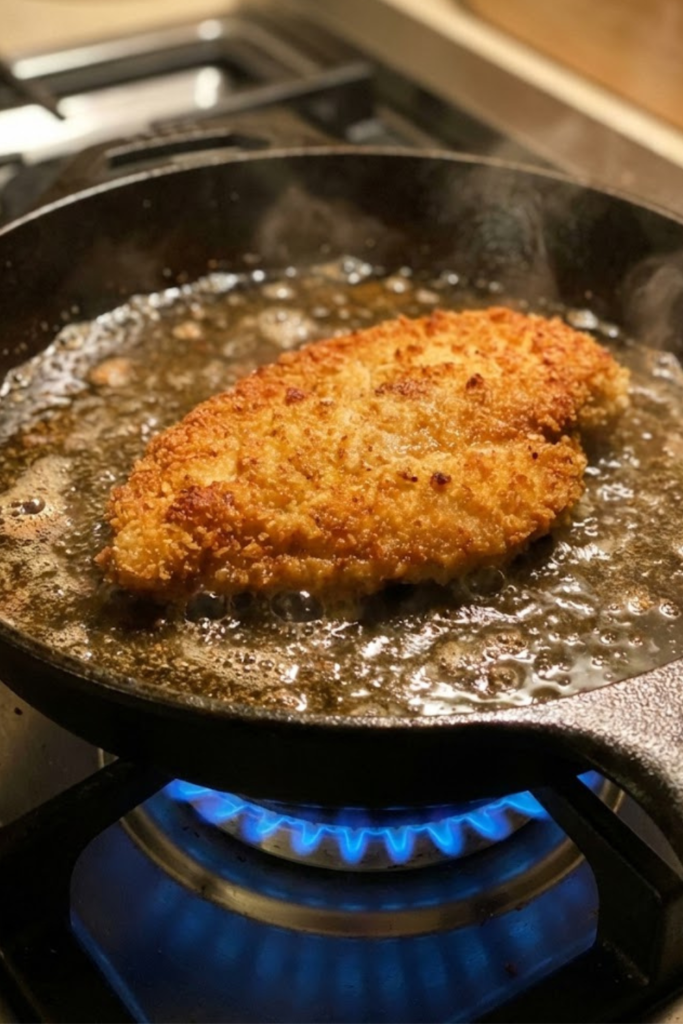
If you want that golden, crispy coating that actually stays on the chicken, you need to use a skillet. I grab my heavy cast-iron pan for this. It holds heat really well.
Do not use butter; it burns too fast. I use avocado oil because it can handle high heat without filling my kitchen with smoke. Olive oil is okay, but keep the heat medium. Heat the oil until it shimmers. If it’s not hot enough, the almond flour soaks up the oil like a sponge, and you get greasy chicken.
Here is the trick: put the chicken in and don’t touch it. Seriously. Let it sizzle for about 3 to 4 minutes. If you try to flip it too early, the crust will stick to the pan and rip off. Peek underneath gently. Is it brown? Good. Flip it once.
The Oven Method
Maybe you don’t want oil splattering all over your stove. I get it. Cleaning up grease is a pain. You can bake this, but you have to use a wire rack.
If you put the breaded chicken directly on a baking sheet, the bottom gets soggy and mushy. It’s gross. Place a wire rack inside a cookie sheet and put the chicken on top. This lets the hot air go under the chicken too. Spray the tops with a little cooking spray to help them brown. It won’t be as crispy as frying, but it’s still pretty good. Bake it at 400°F for about 15-20 minutes depending on how thin you pounded the meat.
Air Fryer Option
I finally bought an air fryer last year, and it is pretty handy for this. It’s great if you are cooking for just one or two people. It gets the almond flour super crunchy with way less oil.
Preheat it to 375°F. Spray the basket so it doesn’t stick. Cook the chicken for about 10 to 12 minutes, flipping it halfway through. Just keep an eye on it because almond flour can go from “perfect” to “burnt toast” really fast in an air fryer.
Selecting Low-Carb Marinara and Cheese
This part can sneak up on you if you aren’t paying attention. You do all that work breading the chicken with almond flour, and then you ruin it by dumping a cup of sugar on top. Seriously, have you looked at the back of a jar of pasta sauce lately? It is shocking how much sugar they add to make it taste “good.”
Reading Labels is Homework
I tell my students to read the instructions twice, and I am telling you to read the nutrition label twice. Tomatoes have natural sugar, sure. But many brands add corn syrup or cane sugar. You want a marinara sauce that has no added sugar.
I usually look for brands like Rao’s or Primal Kitchen. They cost a little more, but they are worth it because they don’t spike my blood sugar. If you are on a budget, just look for the generic store brand that says “sensitive” or “garlic and herb” and check the carb count. You want something under 5g of net carbs per serving.
Fresh Mozzarella vs. Shredded
Here is a little secret I learned: pre-shredded cheese is a cheater. I know it is easier to just open the bag, but those shreds are coated in potato starch or cornstarch to keep them from clumping together. That means you are eating extra carbs you don’t need.
Buy a block of mozzarella and grate it yourself. It takes like two minutes. It melts way better and stretches like in the commercials. If you use fresh mozzarella (the white balls in water), slice them thin and pat them dry with a paper towel. If they are too wet, they turn your crispy chicken into a puddle.
The Broil Finish
Once your chicken is cooked and crispy, spoon a little bit of sauce on top. Don’t drown it! Just a stripe down the middle is enough. Then pile on your grated cheese.
Put the skillet under the broiler in your oven for about 2 or 3 minutes. Do not walk away! I burned a whole dinner once because I went to check my email. Watch it like a hawk. When the cheese is bubbly and has little brown spots, pull it out immediately.

Serving Suggestions for a Complete Keto Meal
You have this beautiful, cheesy chicken on your plate, but it looks a little lonely. You can’t just slap a pile of spaghetti next to it. Well, you could, but then your keto diet is toast. I have tried pretty much every low-carb noodle out there. Some are good, and some taste like rubber bands. Here is what actually works.
Zucchini Noodles (Zoodles)
Zoodles are the go-to for a reason. They are easy to find and cheap. But here is the problem: they release a ton of water. If you don’t watch out, your chicken parm will be swimming in a green soup.
To fix this, I spiralize the zucchini and sprinkle salt on it. Let it sit in a colander for 20 minutes. You will see a lot of water drip out. Squeeze them dry with a towel before you sauté them quickly in a pan with some garlic. They stay crunchy this way.
Spaghetti Squash
This is my personal favorite when I have time. Spaghetti squash actually feels like pasta in your mouth. It has a mild, sweet flavor that goes great with the tomato sauce.
The only downside is that cutting the squash in half is a workout. Be careful! Roast it cut-side down until tender, then use a fork to scrape out the strands. It’s hearty and fills you up without the carb crash.
Palmini or Konjac Noodles
If you really miss the texture of al dente pasta, you might like these. Palmini is made from hearts of palm. It comes in a can. Warning: it smells kind of funky when you first open it. Rinse it really, really well under cold water, and the smell goes away.
Konjac noodles (sometimes called Miracle Noodles) are slippery and chewy. They don’t have much flavor, so they take on the taste of your sauce. They are zero carb usually, which is cool, but the texture isn’t for everyone.
Keep It Simple with Salad
Honestly? Sometimes this dish is so heavy with the almond flour, cheese, and oil that you don’t need “fake” pasta. A big pile of arugula or spinach with a lemon vinaigrette is perfect. The acid in the dressing cuts through the heavy cheese and cleans your palate. Plus, it takes like two minutes to throw together.
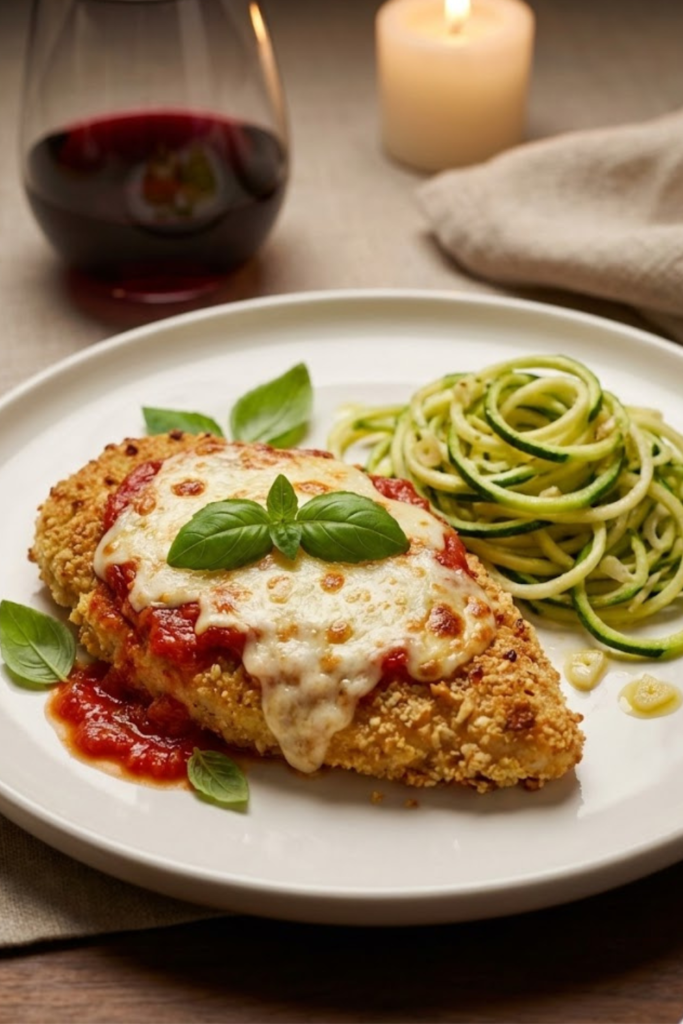
Well, we made it to the end of class! I hope you are feeling a lot more confident about making keto chicken parmesan with almond flour now. It might seem like a lot of steps at first—especially the pounding and the breading station—but I promise it gets easier the second time you do it.
You really don’t have to eat boring grilled chicken and steamed broccoli every night to stay healthy. This recipe proves that you can still have that crispy, cheesy, Italian comfort food without wrecking your goals for 2026. My family asks for this almost every week now, and they don’t even care that it’s “diet food.”
If you found this guide helpful (and I really hope you did!), please save it to your Keto Dinner board on Pinterest. It helps me out a ton and helps other people find good recipes that actually work. Now, go enjoy your dinner!