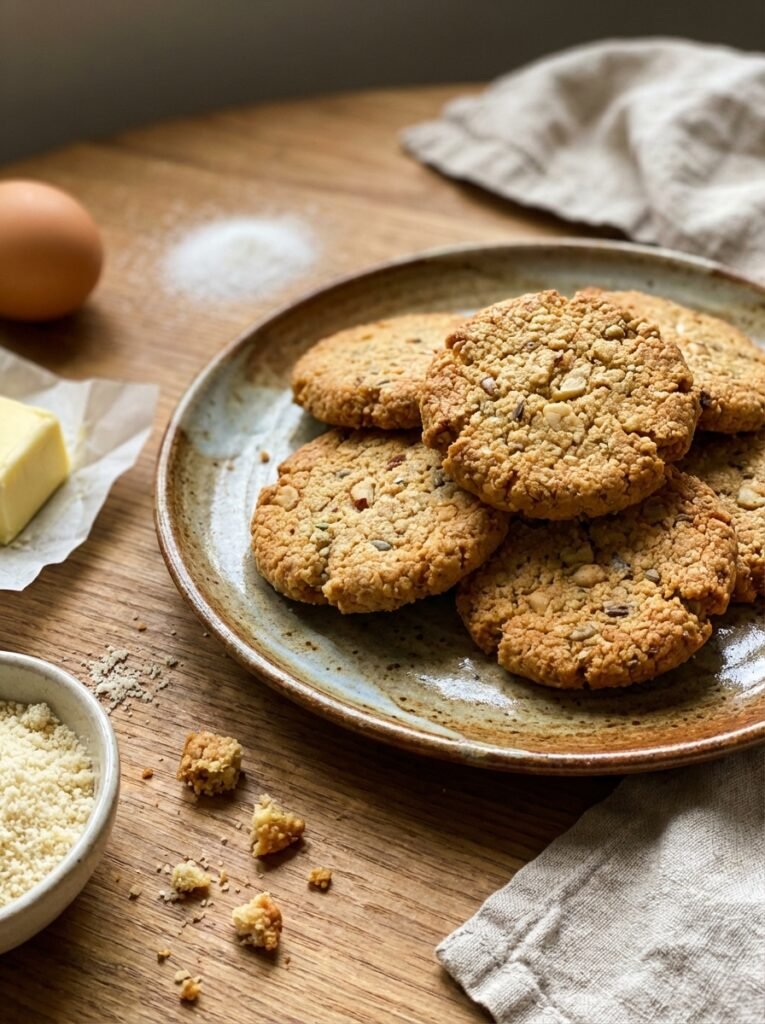
Keto breakfast cookies with almond flour are soft, satisfying grab-and-go treats designed to keep you in ketosis while providing sustained energy throughout your morning. These cookies deliver the perfect balance of healthy fats, protein, and minimal carbohydrates using almond flour as the primary ingredient. Each bite offers buttery texture and mild vanilla sweetness without refined sugars or grains. You can prepare a batch on Sunday and enjoy convenient low-carb breakfasts all week. These cookies work perfectly for busy professionals, fitness enthusiasts, and anyone following a ketogenic diet who needs quick nutrition.
| Metric | Value |
|---|---|
| Prep Time | 15 minutes |
| Cook Time | 12 minutes |
| Total Time | 27 minutes |
| Servings | 12 cookies |
| Difficulty | Easy |
| Cuisine | Keto / Low-Carb |
Why This Recipe Works
I developed this keto breakfast cookie recipe after struggling to find satisfying morning options that wouldn’t spike my blood sugar. Traditional breakfast foods like oatmeal and toast were completely off-limits, leaving me frustrated and hungry. After testing dozens of combinations, I discovered that almond flour creates the ideal structure while coconut oil adds richness and natural ketone-boosting properties. The first time I tasted these cookies fresh from the oven, I knew I’d found something special.
Almond flour serves as the foundation because it contains approximately 3 grams of net carbs per ounce compared to wheat flour’s 20 grams. This single substitution transforms an impossible indulgence into a perfectly acceptable keto staple. The protein content keeps you satisfied for hours, preventing the energy crashes associated with carb-heavy breakfasts. Studies show that fat and protein combinations activate satiety hormones that reduce overall calorie consumption throughout the day.
The texture development fascinated me most during recipe testing. Too much almond flour created dense, gritty results, while too much butter produced greasy disappointments. I landed on a precise 1.5 to 1 ratio that yields cookies with cakey centers and slightly crispy edges. Adding egg whites contributes lift and structure without extra carbohydrates. This science-backed approach consistently delivers cookies with bakery-quality texture.
What really sets these cookies apart is their adaptability to your specific preferences. Whether you prefer chocolate chips, macadamia nuts, or vanilla simplicity, this base recipe accommodates infinite variations. I’ve experimented with everything from sea salt to cinnamon to nut butter swirls. The foundation remains foolproof while allowing creative expression. This flexibility means you’ll never tire of eating the same breakfast twice.
Preparation speed makes this recipe genuinely practical for hectic mornings. From gathering ingredients to pulling cookies from the oven takes less than thirty minutes. Most of that time involves passive baking while you shower or prepare coffee. These cookies stay fresh for five days in an airtight container, creating an entire week’s worth of grab-and-go nutrition. You’ll actually stick with this healthy habit because the friction is nearly eliminated.
Ingredients
| Ingredient | Quantity | Notes with Alternatives |
|---|---|---|
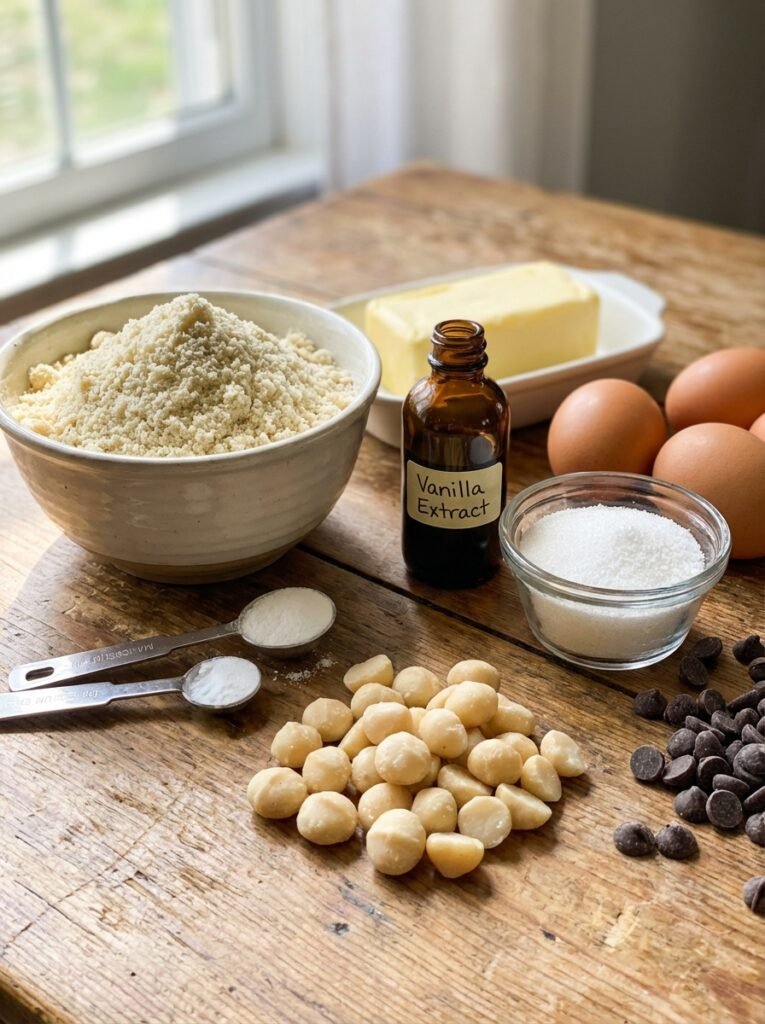
| Almond flour | 2 cups | Use finely ground blanched almond flour for best texture. Coconut flour requires liquid adjustment (use 1/2 cup instead) but adds coconut flavor. |
| Grass-fed butter | 1/2 cup (softened) | Room temperature ensures proper mixing. Ghee provides similar fat content with potential dairy-free option. Coconut oil works but alters flavor profile slightly. |
| Erythritol sweetener | 1/2 cup | Zero-calorie, zero-net-carb option. Monk fruit sweetener tastes slightly different but maintains macros. Avoid maltitol which contains more digestible carbs. |
| Eggs | 2 large | Room temperature eggs incorporate more easily and create fluffier texture. Flax eggs (3 tablespoons ground flaxseed plus 9 tablespoons water) work for vegan adaptation. |
| Vanilla extract | 1 teaspoon | Pure vanilla extract provides superior flavor to imitation. Almond extract (1/2 teaspoon) adds complexity if you prefer. |
| Sea salt | 1/4 teaspoon | Enhances sweetness perception and balances vanilla notes. Himalayan pink salt works identically. Omit if using salted butter. |
| Baking powder | 1/2 teaspoon | Creates lift and lighter crumb structure. Check that your baking powder contains no added sugars or aluminum. |
| Optional add-ins | 1/2 to 3/4 cup | Dark chocolate chips (70% cacao minimum), macadamia nuts, pecans, or unsweetened cocoa powder. Each adds unique flavor without impacting keto compliance. |
Step-by-Step Instructions
Preparation Phase
Step 1: Preheat your oven to 325 degrees Fahrenheit and line a baking sheet with parchment paper to prevent sticking and ensure even bottom browning. Higher temperatures burn the delicate almond flour exterior before centers cook through completely.
Step 2: Gather all ingredients and place them in separate bowls on your work surface, ensuring butter is genuinely softened to room temperature but not melted or separated.
Mixing Phase
Step 3: Combine softened butter and erythritol sweetener in a large mixing bowl, then cream together vigorously for two full minutes using an electric mixer or wooden spoon until the mixture turns pale and fluffy. This creaming action incorporates tiny air pockets that create lift during baking.
Step 4: Add eggs one at a time, beating thoroughly after each addition to ensure complete incorporation and emulsification. This step takes approximately one minute per egg.
Step 5: Mix in vanilla extract and beat for another thirty seconds until the mixture becomes uniform and slightly glossy throughout.
Dry Ingredients Phase
Step 6: Whisk together almond flour, baking powder, and sea salt in a separate bowl, breaking up any lumps in the almond flour that developed during storage. This ensures even leavening throughout every cookie.
Step 7: Fold the dry mixture into the wet mixture using a rubber spatula with gentle, deliberate strokes, combining until no flour streaks remain visible but avoiding overmixing which toughens the final texture.
Step 8: Stir in your chosen add-ins, whether chocolate chips, nuts, or both, distributing them evenly throughout the dough.
Baking Phase
Step 9: Scoop dough using a cookie scoop or tablespoon, forming twelve uniform balls and placing them two inches apart on your prepared baking sheet to allow for slight spreading.
Step 10: Bake for twelve minutes until edges appear set but centers still feel slightly soft to gentle touch. The cookies continue cooking from residual heat after removal.
Step 11: Cool on the baking sheet for five minutes without moving them, then transfer to a wire rack to cool completely before storing.

Chef Tips for Perfect Results
- Measure almond flour by weight using a kitchen scale rather than volume scooping, which compacts the flour and creates dense cookies. Thirty-two ounces of almond flour yields vastly different results than two cups by volume depending on how firmly you pack the measuring cup. Digital scales cost under twenty dollars and transform baking consistency dramatically.
- Use truly room-temperature eggs because cold eggs won’t emulsify properly with butter, resulting in separated, grainy batter that produces disappointing texture. Remove eggs from the refrigerator thirty minutes before baking or place them in warm water for five minutes as a quick alternative.
- Don’t skip the creaming step as it aerates the butter and sweetener, creating structure that produces tender crumb rather than dense hockey pucks. Spend the full two minutes beating after combining butter and erythritol until the mixture resembles fluffy clouds.
- Oven temperature profoundly affects results because almond flour browns quickly and easily at standard 350-degree temperatures. The lower 325-degree setting allows centers to bake through while edges achieve light golden color rather than burnt-tasting darkness.
- Remove cookies when they still appear slightly underdone in the very center because they firm up as they cool on the baking sheet and wire rack. This technique creates chewy centers with set edges rather than uniformly hard cookies that taste like biscotti.
- Store cooled cookies in an airtight container with parchment between layers to prevent sticking and flavor transfer if you include chocolate chips. Glass containers seal better than plastic and don’t absorb oily residue from almond flour.
Common Mistakes to Avoid
Mistake 1: Using Coarse Almond Flour produces gritty texture and poor binding because larger particles don’t hydrate properly during mixing. The solution requires purchasing specifically labeled “blanched almond flour” which is finely ground from blanched almonds stripped of their skins. Bob’s Red Mill and Honeyville brands deliver consistent results. You can also make almond flour at home by blending blanched almonds in a food processor for four to five minutes, pulsing rather than continuous running to avoid releasing oils and creating almond butter.
Mistake 2: Adding Too Many Mix-Ins creates structural problems because excess chocolate chips or nuts weigh down the dough and break cookies during scooping or baking. The limit of three-quarters cup maximum maintains structural integrity. Distribute add-ins thoughtfully rather than dumping them all in one corner. Chop larger nuts into pieces rather than leaving them whole.
Mistake 3: Overmixing the Batter develops gluten despite being gluten-free, creating tough, rubbery cookies rather than tender treats. The solution involves folding dry ingredients in with exactly twelve strokes using a rubber spatula, stopping immediately when no flour streaks remain visible. Resist the urge to keep mixing after the batter looks uniform.
Mistake 4: Forgetting to Line the Baking Sheet causes bottoms to brown unevenly and stick stubbornly to the pan, ruining presentation and creating cleanup headaches. Parchment paper costs less than one dollar per roll and prevents this frustration entirely. Silicone baking mats work equally well for repeated use.
Mistake 5: Baking at Standard Temperature burns the exterior while leaving centers gooey because almond flour’s high fat content browns rapidly. The 325-degree setting prevents this common disaster. If your oven runs hot or cold, invest in an inexpensive oven thermometer to confirm actual internal temperature.
Mistake 6: Overbaking Results in Dry Cookies because you waited too long hoping for perfect browning when almond flour naturally browns easily. Pull cookies from the oven the moment edges set but centers still feel slightly soft when pressed gently with a finger. They’ll firm up perfectly during cooling without becoming hard and crumbly.
Variations and Substitutions
| Ingredient | Substitution | Impact on Flavor |
|---|---|---|
| Vanilla extract | Almond extract (use 1/2 teaspoon) | Creates more pronounced nutty undertones and pairs beautifully with macadamia nuts or dark chocolate chips. |
| Erythritol | Monk fruit sweetener (use same quantity) | Produces slightly lighter sweetness with minimal aftertaste, preferred by some but more expensive than erythritol. |
| Plain almond flour | Pecan flour or walnut flour (same quantity) | Delivers different nutty notes while maintaining similar macronutrients and texture. Pecans taste slightly buttery while walnuts add earthy complexity. |
| Grass-fed butter | Coconut oil (use same quantity) | Produces slightly less rich flavor and firmer texture due to coconut oil’s higher melting point. Adds subtle coconut undertones that pair well with vanilla. |
| Baking powder | Psyllium husk powder (use 2 tablespoons) | Creates denser texture with increased fiber but requires additional liquid. Adds subtle earthy flavor. |
| No add-ins | Cinnamon (add 1 teaspoon) plus chopped pecans | Produces warm spiced flavor reminiscent of snickerdoodles, perfect for fall and winter breakfasts. |
| No add-ins | Unsweetened cocoa powder (add 1/4 cup) plus chocolate chips | Creates rich chocolate flavor with double chocolate impact, increasing richness and decreasing perceived sweetness. |
Serving Suggestions and Pairings
Serve these keto breakfast cookies alongside strong black coffee for a quick morning that requires zero additional preparation or cleanup. The cookies’ mild sweetness complements coffee’s bitter notes perfectly, creating a balanced flavor experience. Add a mug of unsweetened almond milk to round out the macronutrient profile with additional fat and keep you satisfied until lunch.
Pair cookies with herbal tea varieties like chamomile or peppermint for a gentler morning ritual when you prefer avoiding caffeine. This combination works wonderfully for evening snacks as well when afternoon energy dips without the caffeine jolt that interferes with sleep. Chamomile’s subtle sweetness echoes the cookies’ vanilla notes beautifully.
Crumble cookies over full-fat Greek yogurt with unsweetened cocoa powder sprinkled on top for a dessert-like breakfast that delivers protein and probiotic benefits. This presentation transforms simple cookies into an elegant breakfast bowl suitable for weekend entertaining or special occasions. Add a handful of berries if you’re maintaining looser carbohydrate limits.
Pack individual cookies in small paper bags for portable breakfasts during travel, commutes, or camping trips where refrigeration isn’t available. Unlike milk-based breakfast options, these cookies remain stable at room temperature for two days without quality degradation. This portability makes them genuinely practical for active lifestyles and frequent travel.
Combine cookies with nut butter and a few macadamia nuts for substantial pre-workout fuel that provides quick energy without digestive distress. The fat, protein, and moderate calories sustain performance during forty-five-minute gym sessions. This snack strategy beats expensive sports nutrition products while staying within strict keto macros.

Storage and Reheating
| Method | Duration | Instructions |
|---|---|---|
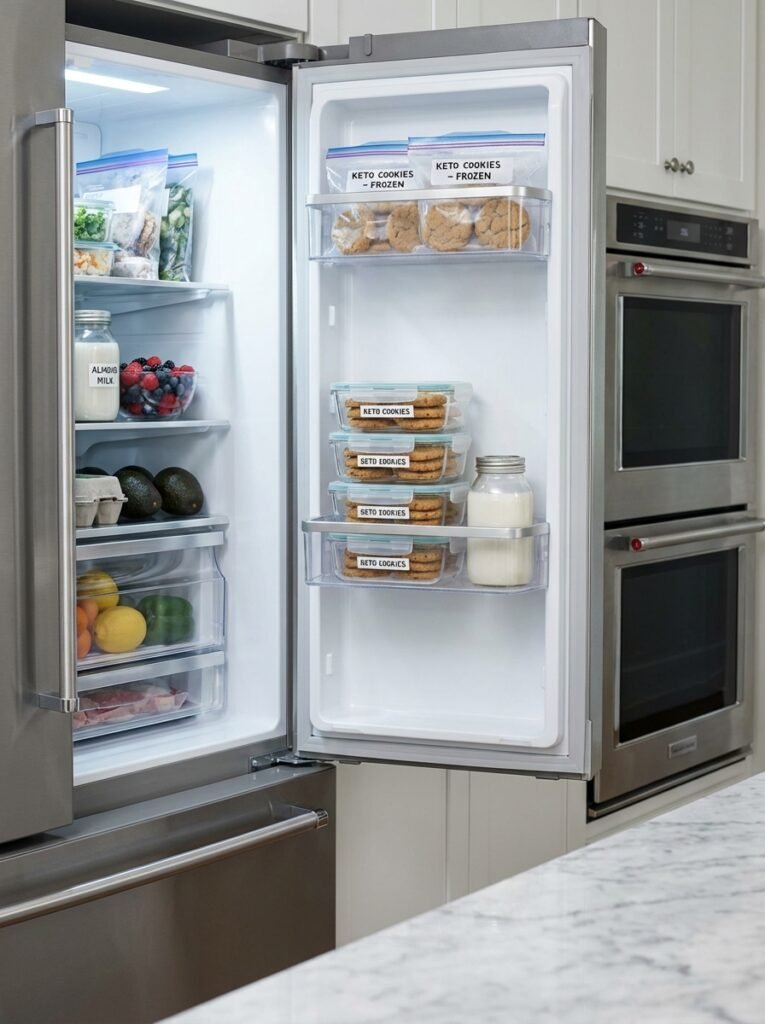
| Airtight Container (Room Temperature) | 5 days | Place completely cooled cookies in a glass container with parchment paper between layers. Keep away from direct sunlight and heat sources. Check for moisture accumulation and wipe interior if condensation appears. |
| Refrigerator | 10 days | Store in an airtight glass container on a shelf away from strong-smelling foods that might transfer flavors. Cookies remain soft and flavorful when properly sealed. Allow to reach room temperature before eating for optimal texture. |
| Freezer | 3 months | Flash freeze individual cookies on a baking sheet for two hours, then transfer to a freezer-safe bag with parchment between layers. Thaw at room temperature for thirty minutes before serving or eat directly from frozen for a firmer texture. |
| Oven Reheating | N/A | Warm cookies at 300 degrees for five to eight minutes to restore softness if they’ve hardened during storage. This technique refreshes texture without drying them further. |
| Microwave Reheating | N/A | Heat individual cookies for fifteen to twenty seconds on high power to restore warmth, being careful not to overheat which makes them rubbery. This quick method works when you’re in a tremendous hurry. |
Nutritional Information
| Nutrient | Amount per Serving |
|---|---|
| Calories | 185 |
| Total Fat | 17g |
| Saturated Fat | 6g |
| Protein | 6g |
| Total Carbohydrates | 5g |
| Dietary Fiber | 3g |
| Net Carbohydrates | 2g |
| Sugar Alcohols | 4g |
| Sodium | 95mg |
| Potassium | 120mg |
Approximate values based on USDA database and standard food labels. Add-ins like chocolate chips or macadamia nuts increase calorie and fat content slightly. Individual cookies may vary based on scooping size and ingredient brands used.
Frequently Asked Questions
Can I Make Keto Breakfast Cookies Without Eggs?
Yes, substitute two eggs with one and one-half tablespoons of ground flaxseed mixed with four and one-half tablespoons of water, stirred together and rested for five minutes. This flax egg replacement mimics the binding properties of regular eggs while maintaining keto-friendly macros. The resulting cookies will be slightly denser but remain completely acceptable in texture and flavor.
What’s the Difference Between Almond Flour and Almond Meal?
Almond flour is made from blanched almonds with skins removed and ground finely, while almond meal uses whole almonds with skins included and is typically coarser. For keto breakfast cookies, always use almond flour because it delivers smoother texture and better binding capability. Almond meal produces grittier results unsuitable for this recipe.
How Do I Know When the Cookies Are Fully Baked?
Cookies are perfectly baked when edges appear set and light golden brown while centers still feel slightly soft when pressed gently with your finger. They continue firming as they cool on the baking sheet for five minutes, then transfer to the wire rack. Removing them slightly early prevents dryness while the residual heat completes the cooking process perfectly.
Can I Use Coconut Flour Instead of Almond Flour?
You can substitute coconut flour but must use only one-half cup instead of two cups because coconut flour absorbs significantly more moisture. Add an additional egg and two tablespoons of butter to compensate for moisture absorption differences. Expect slightly different texture and pronounced coconut flavor that some people love and others dislike.
Do These Cookies Work for Strict Keto Macros?
Each cookie contains only two grams of net carbohydrates and eighteen grams of fat, fitting easily within strict ketogenic macros even when eating multiple cookies. The high fat and protein content creates satiety that prevents overeating despite their dessert-like flavor. One or two cookies provides substantial morning nutrition without exceeding typical keto carb limits.
Why Are My Cookies Spreading Too Much During Baking?
Excessive spreading indicates your butter was too soft, likely melted or nearly melted when you started creaming. Use butter that’s soft enough to accept a fingerprint but holds that impression rather than flattening completely. Refrigerate your dough for fifteen minutes before scooping if spreading still occurs after confirming proper butter temperature.
Can I Prepare the Dough in Advance?
Yes, prepare dough up to two days ahead and store it in an airtight container in the refrigerator. When ready to bake, scoop the cold dough and bake at 325 degrees for fourteen minutes instead of twelve since cold dough requires slightly longer. This advance preparation strategy works beautifully for busy professionals wanting quick weekday breakfasts.
Are These Cookies Suitable for People Avoiding Dairy?
Regular cookies contain dairy butter, but you can substitute with coconut oil in equal quantity for a dairy-free version. Use refined coconut oil if you prefer minimizing coconut flavor or unrefined for subtle coconut notes. The resulting cookies will be slightly less rich and firm than butter versions but remain completely satisfactory.
What’s the Best Sweetener Alternative to Erythritol?
Monk fruit sweetener provides the most similar results to erythritol with minimal aftertaste and identical carbohydrate profile. Use the same quantity as you would erythritol. Stevia works but often imparts noticeable aftertaste that some people find unpleasant in this application.
How Should I Pack These Cookies for Travel or Work?
Place individual cookies in small paper or silicone muffin cups, then transfer to a small container or paper bag. This prevents sticking and damage during transport while keeping your bag from becoming greasy. Pack them in an insulated lunch box with an ice pack if traveling longer than four hours, though they remain stable at room temperature for at least two days.
Conclusion
Keto breakfast cookies with almond flour transform your morning routine from complicated cooking sessions into grab-and-go simplicity that genuinely supports your health goals. These portable, satisfying cookies deliver sustained energy, ketone production, and genuine enjoyment without the guilt or blood sugar spikes associated with traditional breakfast foods. Making a batch takes less than thirty minutes of active time while providing five days of convenient nutrition. The buttery texture, mild vanilla sweetness, and infinite customization options mean you’ll actually look forward to breakfast instead of viewing it as just another obligation. Start preparing a double batch this weekend and experience how these simple cookies solve the keto breakfast challenge that frustrates so many dedicated low-carb followers.
Print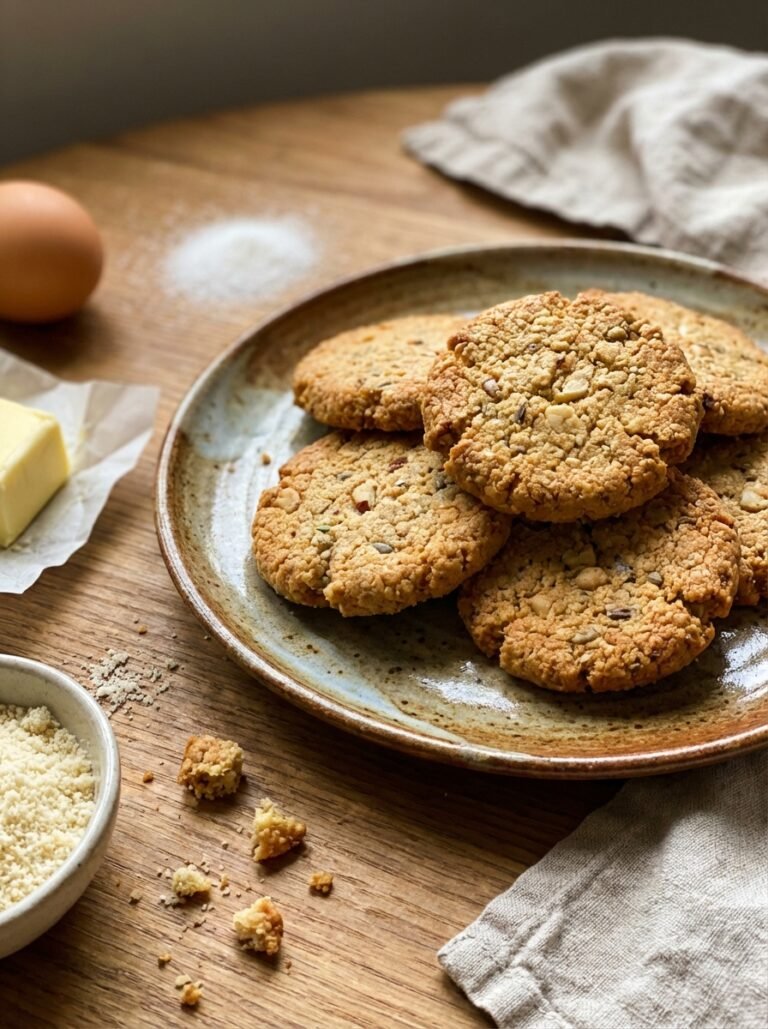
Keto Breakfast Cookies with Almond Flour
Soft, bakery-quality keto breakfast cookies made with almond flour for low net carbs and high protein. Packed with healthy fats and mild vanilla sweetness, these no-refrigeration-required cookies are perfect for meal prepping. Great for busy individuals on a low-carb diet.
- Total Time: 27
- Yield: 12 cookies 1x
Ingredients
2 cups almond flour
1/2 cup coconut oil, melted
1/4 teaspoon baking powder
1/4 teaspoon salt
2 large eggs
1 cup erythritol
1 teaspoon vanilla extract
1/4 cup ground flaxseed
1/4 cup unsweetened almond flour
1/4 teaspoon chia seeds (optional for texture)
Instructions
Preheat oven to 350°F (175°C) and line a baking sheet with parchment paper
Mix almond flour, ground flaxseed, baking powder, and salt in a large bowl
Beat eggs, erythritol, and vanilla extract in a separate bowl
Combine wet and dry ingredients until smooth
Form 12 equal-sized balls using 2 tablespoons of dough each
Place 2 inches apart on the baking sheet
Bake for 12 minutes or until golden around edges
Cool for 5 minutes before transferring to a wire rack
Notes
Store in an airtight container for up to 3 days
Freeze in a single layer for long-term storage
Add chopped walnuts, pumpkin seeds, or unsweetened coconut flakes for extra crunch
Use alcohol-free vanilla extract to meet halal requirements
- Prep Time: 15
- Cook Time: 12
- Category: Breakfast
- Method: Baking
- Cuisine: Keto / Low-Carb
- Diet: Low-Carb
Nutrition
- Serving Size: 1 cookie
- Calories: 180
- Sugar: 0g
- Sodium: 60mg
- Fat: 11g
- Saturated Fat: 7g
- Carbohydrates: 3g
- Fiber: 1.5g
- Protein: 4g
- Cholesterol: 25mg