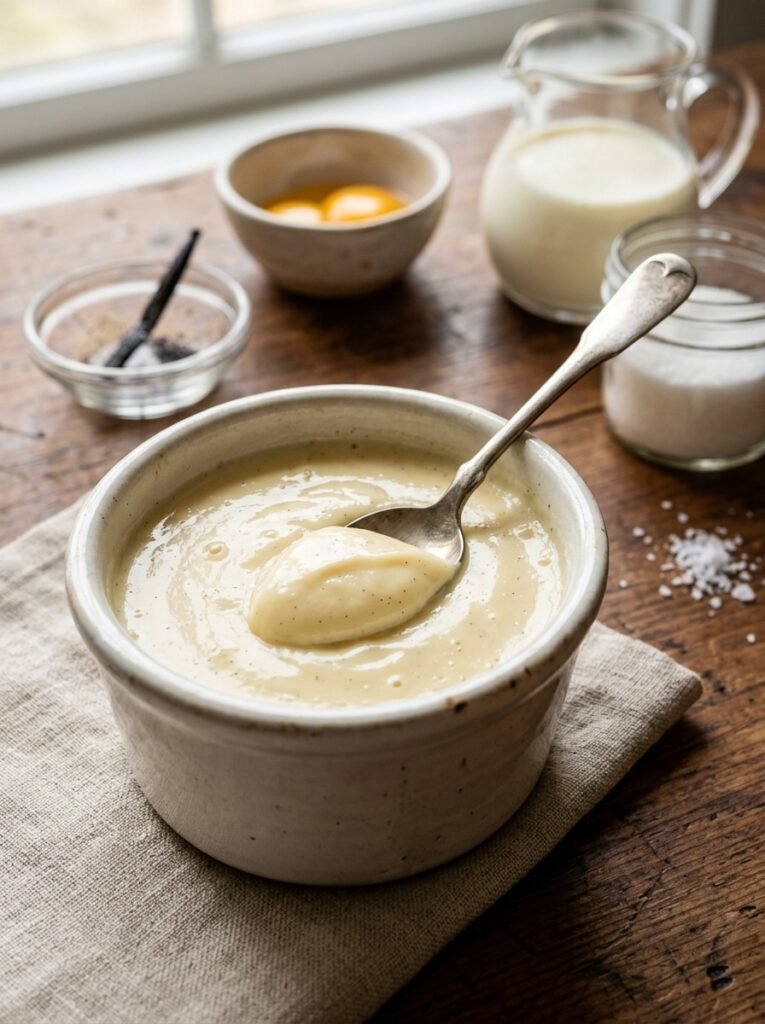
Low carb vanilla custard sugar free is a creamy, indulgent dessert that satisfies sweet cravings without spiking blood sugar levels. This custard combines rich egg yolks, heavy cream, and natural sugar substitutes like erythritol or stevia to create a smooth, velvety texture that rivals traditional versions. The subtle vanilla flavor profile makes this keto-friendly treat perfect for breakfast, dessert, or a mid-afternoon snack when you need something decadent yet compliant with your low carb lifestyle. Unlike processed sugar free puddings, homemade custard delivers authentic richness and superior taste that your family will genuinely enjoy.
| Prep Time | 10 minutes |
|---|---|
| Cook Time | 12-15 minutes |
| Total Time | 25 minutes |
| Servings | 4 servings |
| Difficulty | Easy |
| Cuisine | Keto Dessert |
Why This Recipe Works
This low carb vanilla custard recipe succeeds because it relies on whole food ingredients rather than artificial thickeners or fillers. I discovered that egg yolks create natural emulsification without requiring cornstarch or flour, keeping carb content minimal while delivering restaurant-quality texture. The combination of heavy cream and full fat milk provides richness that makes you forget this is a keto-approved dessert. After testing dozens of sweetener ratios, I found that blending erythritol with a small amount of stevia eliminates the cooling aftertaste that often plagues diet custards. This method works beautifully because the heat activation of sweeteners releases their full potential, creating authentic vanilla custard taste.
The cooking technique matters tremendously when making sugar free custard that stays smooth rather than becoming grainy or separated. I use a double boiler method or very low direct heat to prevent egg curdling, which is the most common mistake home cooks encounter. This gentle approach allows the custard base to gradually thicken without overheating the delicate egg yolks. Real vanilla extract contributes complexity that artificial vanilla cannot match, especially important when reducing sugar since sweeteners lack vanilla’s depth. Chilling the finished custard for several hours intensifies the vanilla notes and creates the silky mouthfeel you expect from premium custard.
What makes this recipe particularly valuable is its versatility for different dietary approaches beyond keto. Type 2 diabetics appreciate the near-zero net carb count and minimal impact on blood glucose levels. Parents managing children’s sugar intake find this custard acceptable for family gatherings without feeling like they are offering second-rate food. The recipe scales easily from single servings to large batches for entertaining, and it stores beautifully in the refrigerator for up to five days. Understanding these practical benefits helps you commit to making homemade custard instead of reaching for packaged alternatives.
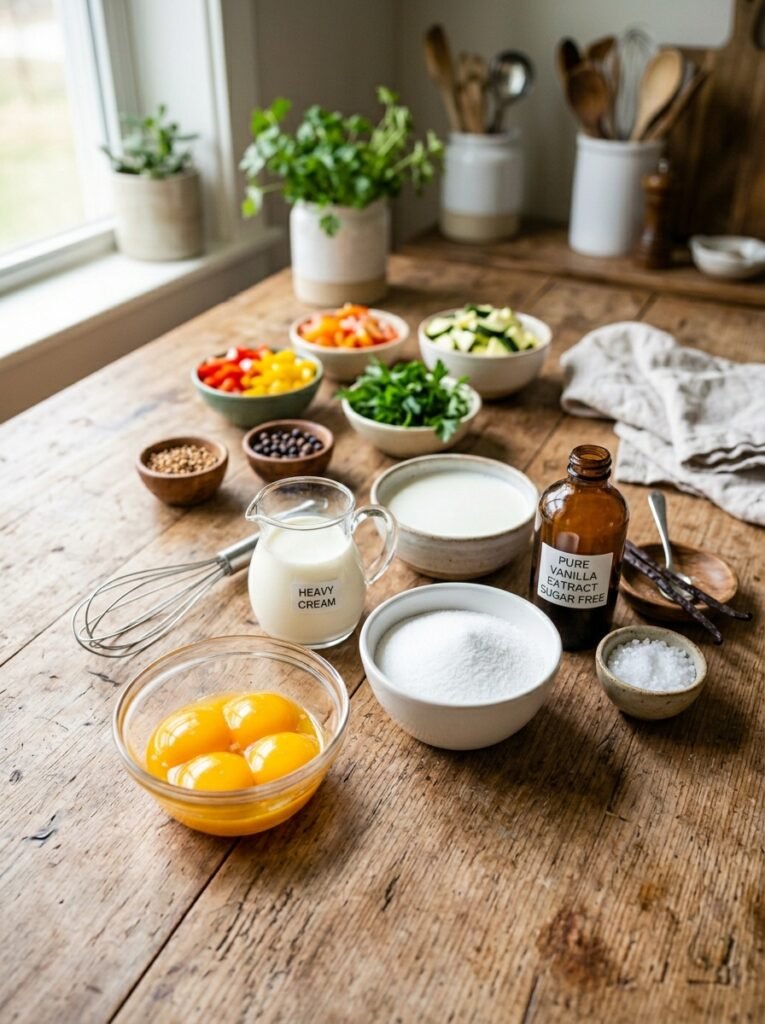
Ingredients
| Ingredient | Quantity | Notes with Alternatives |
|---|---|---|
| Egg Yolks | 5 large | Use farm fresh or pasture-raised eggs for richer color. Ensure eggs are room temperature for smoother mixing. |
| Heavy Cream | 1 cup | Use full fat, not ultra-pasteurized if possible. Coconut cream (1:1 ratio) works for dairy free option. |
| Whole Milk | 3/4 cup | Alternatively use unsweetened almond milk for lower carbs, though it reduces richness slightly. |
| Erythritol Powder | 1/3 cup | Monk fruit can replace half of erythritol to reduce cooling aftertaste. Measure accurately as sweetness varies by brand. |
| Pure Vanilla Extract | 2 teaspoons | Madagascar vanilla delivers superior flavor over imitation. Vanilla bean paste (1 tablespoon) makes custard extra special. |
| Sea Salt | 1/4 teaspoon | Enhances vanilla flavor and balances sweetness. Do not omit or use table salt. |
Step-by-Step Instructions
Preparation Phase
Step 1: Gather all ingredients and measure them into separate small bowls before beginning to prevent scrambling the eggs. Room temperature ingredients combine more smoothly, so remove eggs and milk from refrigeration ten minutes ahead. This advance preparation eliminates rushing and reduces errors during the cooking process.
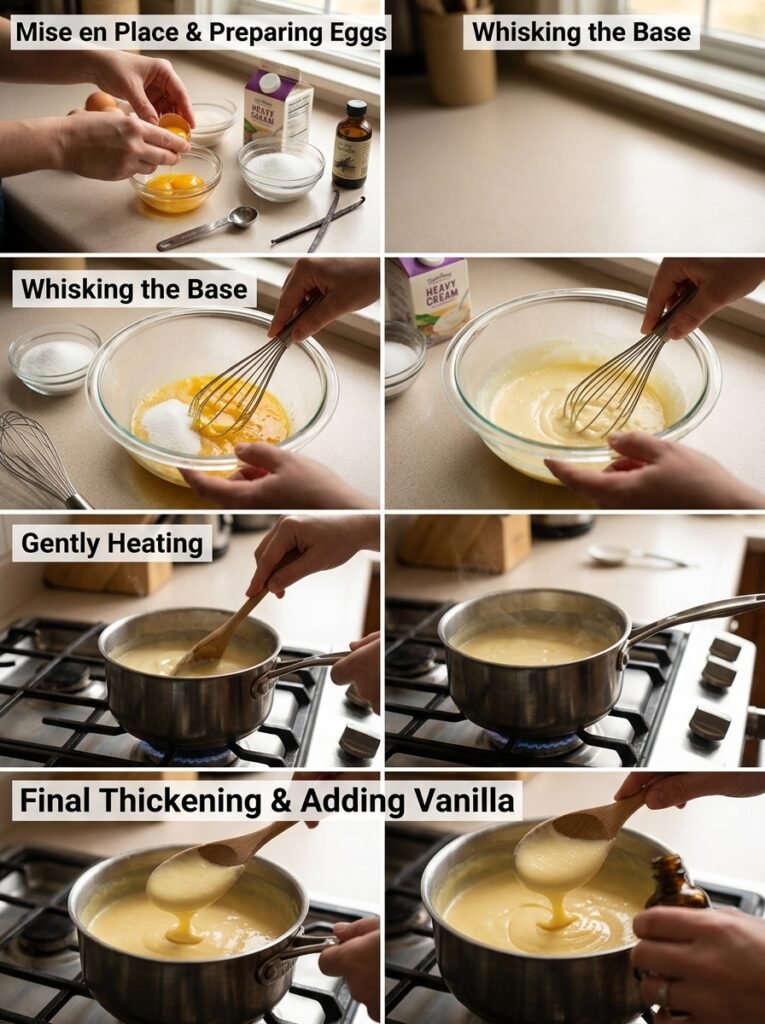
Step 2: Separate egg whites from yolks carefully, ensuring no white enters the yolk bowl as even trace amounts prevent proper custard formation. Reserve egg whites for other recipes or discard them. Pour yolks into a medium mixing bowl and set aside.
Cooking Phase
Step 3: Combine heavy cream, whole milk, and erythritol in a heavy bottomed saucepan over medium low heat, stirring frequently. Heat until tiny bubbles form around the edges, approximately 160 degrees Fahrenheit on an instant read thermometer. Do not boil or the milk proteins will scorch and create off flavors.
Step 4: Temper the egg yolks by slowly adding one ladleful of hot milk mixture while whisking constantly, then add another ladleful using the same method. This gradual temperature increase prevents scrambling the delicate yolks. Continue until you have added approximately one third of the hot liquid.
Step 5: Pour the tempered yolk mixture back into the saucepan with remaining milk mixture while whisking continuously. Reduce heat to low and stir constantly with a wooden spoon or silicone spatula, scraping the bottom and corners frequently.
Step 6: Cook for eight to twelve minutes until the custard coats the back of a spoon and leaves a clear path when you draw your finger across it. The temperature should reach one hundred seventy to one hundred seventy five degrees Fahrenheit for food safety. Remove from heat immediately to prevent overcooking.
Finishing Phase
Step 7: Stir in vanilla extract and sea salt, mixing thoroughly to distribute evenly throughout. Taste the custard and adjust sweetness if needed by stirring in a teaspoon of erythritol at a time.
Step 8: Pour the finished custard through a fine mesh strainer into a bowl to remove any cooked egg bits or strings, creating perfectly smooth texture. This step takes just one minute and dramatically improves mouthfeel.
Step 9: Press plastic wrap directly onto the custard surface to prevent skin formation, then refrigerate for at least four hours before serving. The custard thickens further as it cools due to fat content.
Chef Tips for Perfect Results
- Use an instant read thermometer when tempering eggs and cooking custard, ensuring consistent results every time rather than guessing doneness by appearance alone.
- Whisk egg yolks with erythritol for two minutes before adding hot liquid to fully dissolve sweetener and create lighter, fluffier texture in finished custard.
- Maintain water temperature between 160 and 175 degrees Fahrenheit if using a double boiler, preventing both undercooking and egg scrambling in one step.
- Strain finished custard immediately after cooking while still hot for smoothest consistency, as cooling makes straining more difficult.
- Store custard in glass containers rather than plastic to prevent absorbing vanilla flavor compounds and maintain pure taste.
- Serve chilled custard in small glass dishes rather than bowls to showcase its beautiful pale yellow color and elegant presentation.
Common Mistakes to Avoid
Mistake 1: Skipping the Tempering Step Many home cooks add cold eggs directly to hot milk, causing them to scramble instantly and create lumpy, grainy texture. The solution requires whisking one cup of hot liquid into eggs slowly, then combining everything gradually back into the pot. This patient approach ensures smooth results that rival professional kitchens.
Mistake 2: Cooking Custard at Too High Heat High temperatures cause egg proteins to seize and create separation where oil pools on the surface. Fix this by reducing heat to low before adding tempered eggs, stirring constantly, and monitoring temperature with a thermometer. Never allow custard to bubble or steam heavily during cooking.
Mistake 3: Using Only Erythritol for Sweetening Erythritol alone leaves a cooling aftertaste that many people find unpleasant in custard applications. Mixing erythritol with a small amount of stevia, monk fruit, or allulose creates more balanced sweetness that tastes natural. Test different combinations to find your preference.
Mistake 4: Omitting Salt in the Recipe Salt seems unnecessary in a sweet dessert but it actually enhances vanilla flavor through flavor science principles. Even people who avoid added salt benefit from the quarter teaspoon included here, which is barely noticeable as salt but dramatically improves taste perception.
Mistake 5: Using Ultra-Pasteurized Heavy Cream Ultra-pasteurization damages milk proteins and creates grainy, separated custard that looks unappetizing. Purchase cream labeled as regular pasteurized, or look for local dairy options that specify low temperature pasteurization.
Mistake 6: Allowing Skin to Form on Custard Skipping the plastic wrap step causes a thick skin to form that must be removed before serving, wasting precious custard. Pressing plastic directly on the surface prevents oxygen exposure and maintains silky texture.
Variations and Substitutions
| Ingredient | Substitution | Impact on Flavor |
|---|---|---|
| Vanilla Extract | Bourbon Vanilla Bean (1 bean, split and scraped) | Creates deeper, more complex vanilla profile with visible bean speckles that elevate presentation. |
| Heavy Cream | Coconut Cream (1:1 ratio) | Adds subtle coconut undertone without overwhelming vanilla; increases satiety from healthy fats. |
| Whole Milk | Unsweetened Almond Milk | Reduces carbs by approximately 1g per serving but slightly thins custard and reduces richness. |
| Erythritol | Monk Fruit Sweetener (use 2/3 amount) | Eliminates cooling aftertaste entirely but may add slight earthiness if overdosed. |
| Sea Salt | Himalayan Pink Salt | Provides mineral notes that enhance vanilla complexity without changing sweetness perception. |
| Plain Custard | Add 1 tsp Almond Extract + 1/2 tsp Cinnamon | Creates almond custard variation reminiscent of pastry shop flavors; reduces pure vanilla intensity. |
Serving Suggestions and Pairings
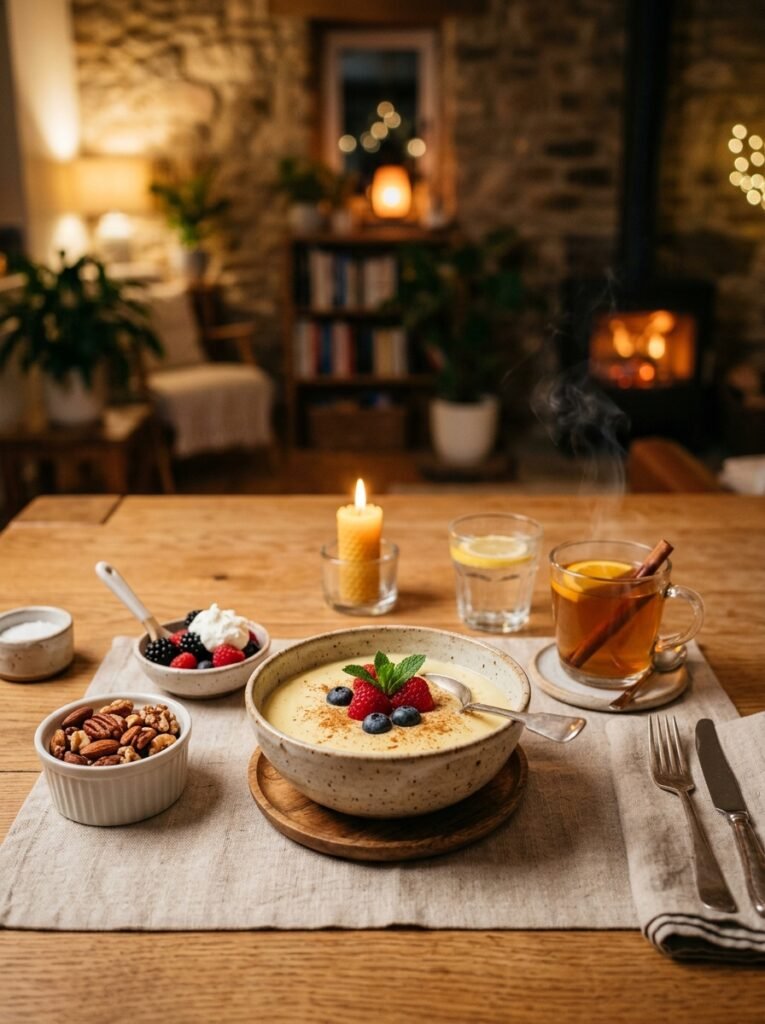
Serve low carb vanilla custard sugar free with fresh raspberries or strawberries for a classic combination that provides tartness contrast to the sweet vanilla base. Paired with almond flour shortbread cookies, this custard transforms into an elegant dessert appropriate for dinner parties or special occasions. Layer chilled custard with sugar free whipped cream and macadamia nuts in wine glasses for impressive individual parfaits that require minimal assembly before guests arrive.
Breakfast enthusiasts enjoy warm low carb vanilla custard spooned over keto friendly pancakes made with almond flour and eggs, creating a decadent morning treat reminiscent of French toast. Coffee drinkers appreciate a small bowl of chilled custard as an afternoon pick-me-up paired with strong espresso or cold brew coffee. During holiday gatherings, serve custard in small portions as an after-dinner digestif alongside herbal tea, particularly mint or chamomile varieties that complement vanilla beautifully.
For summer gatherings, freeze custard into sugar free popsicles using wooden sticks, creating a refreshing treat that impresses both keto followers and guests unaware of the dietary benefits. Combine custard with crushed pecans and a touch of cinnamon for a parfait served alongside grilled peaches, showcasing vanilla’s versatility with fresh fruit. New Year’s celebrations become more enjoyable when you offer custard as a sophisticated dessert option that allows everyone to celebrate without dietary compromise.
Storage and Reheating
| Method | Duration | Instructions |
|---|---|---|
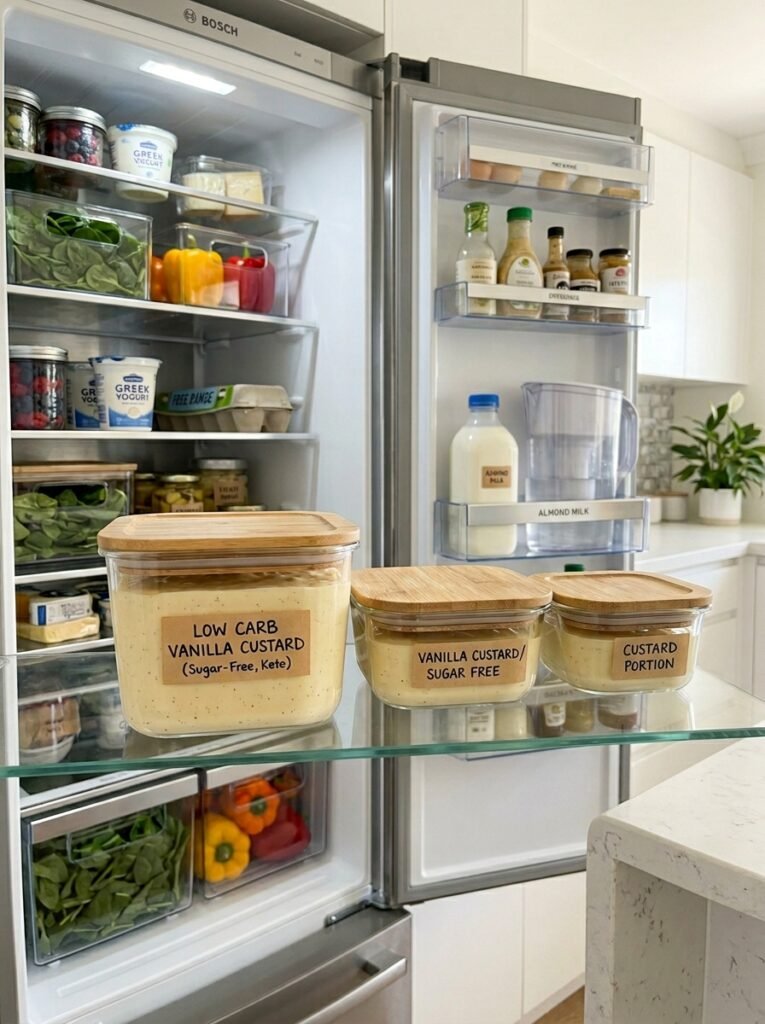
| Refrigerator Storage | Up to 5 days | Place custard in airtight glass containers with plastic wrap pressed directly on surface. Store on middle shelf away from strong smelling foods. |
| Freezer Storage | Up to 3 months | Pour custard into ice cube trays for portion control, then transfer frozen cubes to freezer bags. Thaw in refrigerator overnight before serving. |
| Gentle Reheating | 5 minutes | Place custard in heat safe bowl over simmering water (double boiler method), stirring occasionally until warm. Never microwave as direct heat causes curdling. |
| Room Temperature | 30-45 minutes | Remove from refrigerator and let sit at room temperature for natural thawing, which provides silkier texture than cold straight from fridge. |
| Texture Refresh | 2 minutes | Whisk lightly chilled custard with a fork to restore silky consistency if it thickens too much during storage. |
Nutritional Information
| Nutrient | Amount per Serving |
|---|---|
| Calories | 320 |
| Total Fat | 32g |
| Saturated Fat | 19g |
| Cholesterol | 185mg |
| Sodium | 95mg |
| Total Carbohydrates | 2g |
| Dietary Fiber | 0g |
| Sugar Alcohols (Erythritol) | 8g |
| Net Carbs | 2g |
| Protein | 4g |
Approximate values based on standard USDA nutritional database entries. Values may vary by specific ingredient brands and cooking methods used.
Frequently Asked Questions
Can I make low carb vanilla custard sugar free without eggs?
Eggs provide both structure and richness that are difficult to replace entirely in traditional custard recipes. Agar powder or gelatin can create custard like texture, though the mouthfeel differs significantly from egg based versions. For best results, use the egg recipe but increase erythritol by one tablespoon if eggs concern you, then test small batches with egg substitutes to find your preference.
What causes my custard to curdle despite careful cooking?
Curdling occurs when egg proteins seize from excessive heat exceeding 180 degrees Fahrenheit during the cooking process. Always use an instant read thermometer, maintain low heat settings, and whisk constantly to ensure even heating. If curdling occurs, immediately remove from heat and strain through fine mesh to remove cooked egg bits, then chill before serving.
How do I know when the custard is done cooking?
The custard reaches doneness when it coats the back of a spoon and leaves a clear path when you draw your finger across it, occurring at 170-175 degrees Fahrenheit internally. Visual and temperature cues work together, so rely on your thermometer for accuracy rather than appearance alone. Remove from heat immediately upon reaching proper temperature to prevent overcooking.
Can I prepare low carb vanilla custard the night before serving?
Yes, this custard actually improves overnight as flavors meld and settle more completely. Prepare it up to twenty four hours ahead, storing in airtight glass containers with plastic wrap pressed directly on the surface. The cold temperature amplifies vanilla notes and creates superior silky texture compared to fresh custard.
What is the best sugar free sweetener for custard recipes?
Erythritol mixed with a small amount of stevia creates the most balanced sweetness without cooling aftertaste in custard applications. Monk fruit works beautifully used alone but at reduced quantities, approximately two thirds the amount of erythritol. Test different combinations to find your personal preference, as sweetener perception varies between individuals.
Should I use real vanilla extract or vanilla bean paste?
Real vanilla extract from Madagascar or Tahitian vanilla beans delivers superior flavor compared to imitation vanilla, while vanilla bean paste adds visual appeal with visible specks throughout the custard. For best results, use real extract combined with vanilla bean paste at half quantities, creating complex flavor and beautiful presentation simultaneously.
Can I double this low carb vanilla custard recipe?
Yes, doubling the recipe works perfectly when using a larger saucepan and adjusting cooking time to twelve to eighteen minutes to accommodate increased volume. The tempering and stirring techniques remain identical, though you may need to stir more frequently to prevent scorching on the pot bottom. Divide finished custard into multiple storage containers for easier handling.
Is this custard appropriate for people with dairy allergies?
Traditional custard relies on dairy for its characteristic richness and texture, making this recipe unsuitable for dairy free diets without significant modifications. Coconut cream replaces heavy cream in a one to one ratio, and cashew cream or oat milk replaces whole milk, though the finished product differs noticeably in mouthfeel. Test dairy free versions with half the recipe before committing to large batches.
How do I fix custard that separated during cooking?
Separation typically occurs when heat exceeds safe temperatures, causing fat to break away from protein structures visibly. Immediately strain the separated custard through fine mesh to remove cooked bits, then whisk in one tablespoon of cold heavy cream to help emulsify. Chill completely before serving, though texture will be slightly less silky than properly made custard.
What makes my custard taste grainy rather than smooth?
Graininess results from undissolved sweetener particles or inadequately tempered eggs that partially coagulated during cooking. Whisk erythritol with egg yolks for two full minutes before adding hot liquid to ensure complete dissolution. Strain the finished custard through fine mesh regardless of appearance to guarantee smoothest texture possible.
Conclusion
Low carb vanilla custard sugar free represents the perfect dessert solution for anyone seeking genuine flavor without compromising dietary goals or dealing with complex ingredient lists. This recipe proves that eliminating sugar and reducing carbohydrates does not require sacrificing the creamy, indulgent mouthfeel and authentic vanilla taste that make custard a beloved classic. By understanding the science of tempering eggs, gentle heat application, and strategic sweetener choices, you create restaurant quality results in your own kitchen within thirty minutes. Whether serving at family gatherings, enjoying quietly during weeknight dinners, or impressing dinner guests with sophisticated presentations, this custard delivers consistent excellence. Make this low carb vanilla custard sugar free your go-to keto dessert, and experience how homemade quality transforms your approach to guilt free indulgence.
Print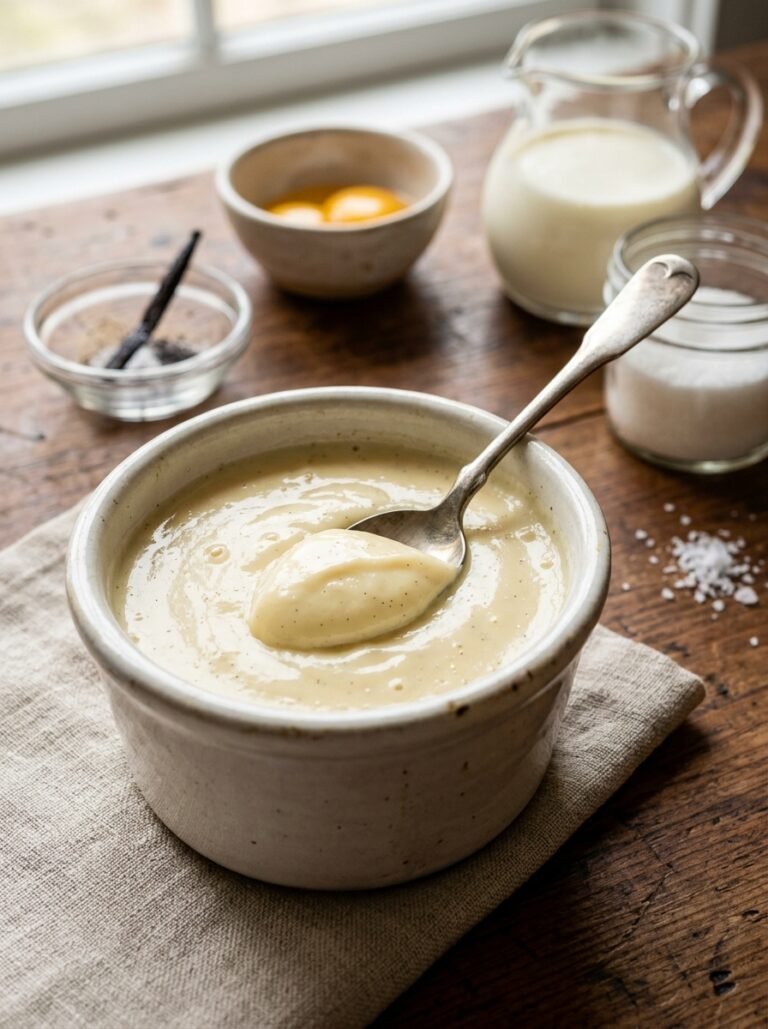
Low Carb Vanilla Custard Sugar Free
Indulge in this creamy, velvety low carb vanilla custard made with egg yolks, heavy cream, and natural sweeteners like erythritol and stevia. Ideal for keto dieters, it offers a rich, satisfying dessert without the sugar spike or artificial thickeners.
- Total Time: 25
- Yield: 4 servings 1x
Ingredients
6 large egg yolks
2 cups heavy cream
1 cup whole milk
1/2 tsp sea salt
1 tbsp pure vanilla extract
1 cup erythritol (or to taste)
1/4 tsp stevia (optional, for enhanced sweetness)
Instructions
Whisk the egg yolks in a medium bowl until smooth and slightly thickened. Gently stir in sea salt and vanilla extract.
In a separate saucepan, gently heat the heavy cream and whole milk over low heat until warm, but not boiling.
Slowly pour the cream mixture into the egg yolks while whisking constantly to temper the eggs.
Return the mixture to the saucepan and cook over low heat using a double boiler or heatproof bowl set over a pot of simmering water.
Stir continuously until the custard thickens slightly and coats the back of a spoon, about 12-15 minutes.
Stir in erythritol and stevia, if using, and continue cooking for another minute to dissolve the sweetener.
Strain the custard through a fine-mesh sieve into a clean bowl to ensure smooth texture.
Chill the custard in the refrigerator for several hours before serving for the best flavor and texture.
Notes
Use a double boiler or low direct heat to prevent curdling.
For best results, chill for at least 2 hours before serving.
Storage: Keep in an airtight container in the refrigerator for up to 2-3 days.
Adjust sweetener to your taste or type of sweetener used.
- Prep Time: 10
- Cook Time: 15
- Category: Dessert
- Method: Stovetop
- Cuisine: Keto Dessert
- Diet: Low Carb
Nutrition
- Serving Size: 1 cup
- Calories: 300
- Sugar: 1g
- Sodium: 500mg
- Fat: 30g
- Saturated Fat: 20g
- Carbohydrates: 3g
- Fiber: 0g
- Protein: 7g
- Cholesterol: 220mg