I’ll never forget the first time I swapped traditional pasta for zucchini noodles in my grandmother’s classic soup recipe. I was skeptical! But let me tell you, that first spoonful changed everything. It’s comforting, warm, and doesn’t leave you with that heavy, carb-loaded crash afterwards. Did you know that a single cup of zucchini has only about 3 grams of net carbs? That’s a game-changer for us low-carb lovers! In this article, we are going to dive deep into making the absolute best Keto chicken zucchini noodle soup you’ve ever tasted. We’re talking rich bone broth, tender shredded chicken, and zoodles that stay perfectly al dente. Whether you’re fighting off a cold or just need a hug in a bowl, this recipe is your new best friend. Let’s get cooking!
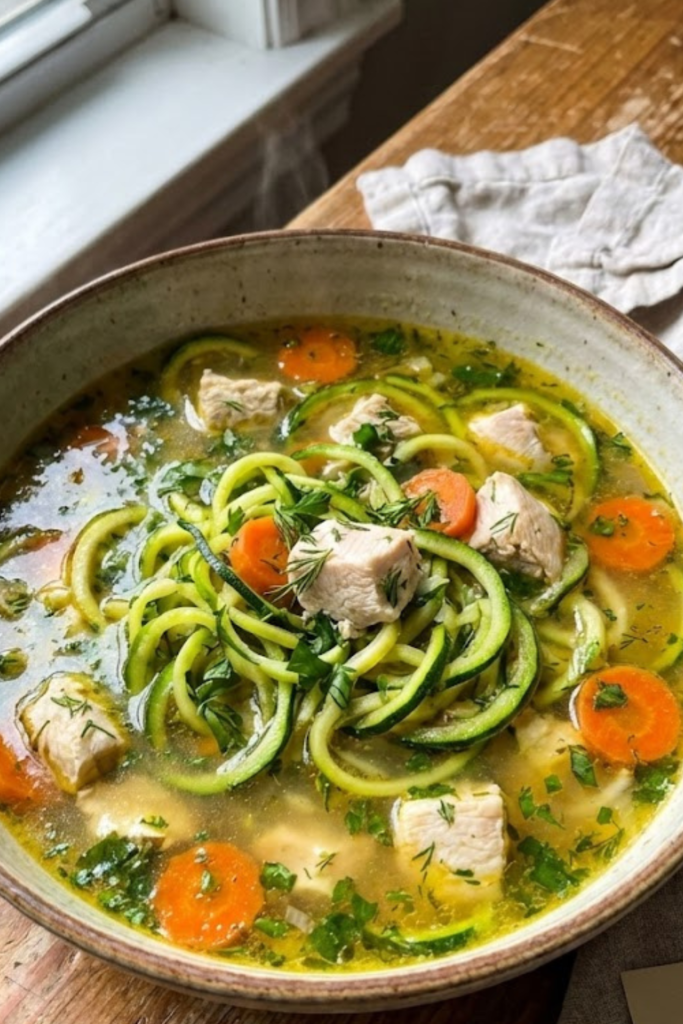
Why This Low-Carb Chicken Soup is a Pantry Staple
Honest truth time? When I first started eating low-carb, I hit a wall. I remember staring into my fridge one rainy Tuesday, feeling absolutely miserable because I couldn’t just boil up a box of pasta. I wanted comfort food, not a salad.
That’s when I stumbled onto the magic of Keto chicken zucchini noodle soup. It wasn’t just a substitute; it was a total lifesaver. I messed up the first time, though—I let the zucchini sit in the hot broth for like 20 minutes while I folded laundry.
Big mistake. I came back to mush.
But once I got the timing right, I realized this soup is the real deal. It’s got that warm, hug-in-a-bowl feeling without the heavy carb crash that usually sends me napping on the couch by 2 PM.
It’s a Secret Weapon for the “Keto Flu”
If you’ve ever done keto, you know about the dreaded “flu.” You feel foggy, headache-y, and just blah. It’s usually because your electrolytes are out of whack.
This soup is packed with bone broth, which is basically liquid gold for your body.
I remember one week where I felt like garbage, and I batch-cooked a huge pot of this low carb chicken soup. I drank the broth for breakfast, lunch, and dinner. It sounds excessive, I know, but it worked like a charm. The sodium and minerals in the broth brought me back to life faster than any sports drink could.
Quick, Cheap, and Easy (My Favorite Three Words)
Let’s be real, eating healthy can get expensive. Have you seen the price of almond flour lately? It’s nuts.
But this soup uses humble ingredients. We are talking celery, carrots, onions, and chicken.
You can even use a rotisserie chicken from the grocery store if you’re feeling lazy (I do this all the time). The only “fancy” tool you really need is a spiralizer for the zucchini noodle recipes. And if you don’t have one? A vegetable peeler makes nice ribbons, too.
I’ve made this meal for under $15, and it feeds my whole family with leftovers for lunch.
Fits Just About Everyone’s Diet
Cooking for a crowd is a nightmare these days. You got your gluten-free friend, your dairy-free cousin, and your paleo brother. It’s a headache trying to please everyone.
This soup is the great equalizer.
Since there are no grains or dairy (unless you add cheese at the end), it’s safe for almost everyone. I’ve served this Paleo chicken soup to die-hard bread lovers, and they didn’t even complain about the missing pasta. They were too busy slurping up the broth!
Just make sure you don’t overcook those zoodles. Trust me, nobody wants to eat green mush. Keep ’em fresh and crunchy, and you’re golden.
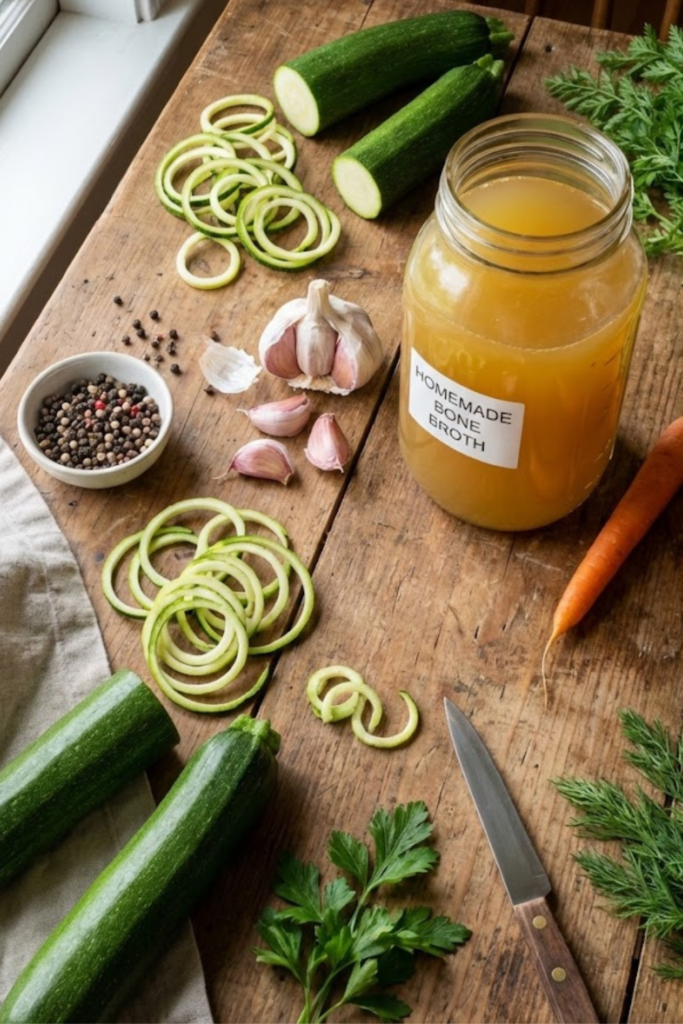
Essential Ingredients for Flavorful Keto Soup
You can’t build a strong house with weak bricks, right? Same thing goes for soup. If you throw bland stuff in a pot, you’re gonna get a bland dinner. I learned this the hard way when I tried to make soup with just water and a bouillon cube back in my college days. Yuck.
Here is what you actually need to make this soup taste amazing.
The Chicken: To Cook or Not to Cook?
Honestly, I cheat a lot here. Most of the time, I grab a rotisserie chicken from the deli on my way home. It’s already cooked, it’s seasoned, and it shreds easily. It saves me like 20 minutes, which is huge on a school night.
But, if I have time on a Sunday, I will poach raw chicken thighs. Why thighs? Because breasts dry out too fast. Thighs stay juicy and have way more flavor. If you use breasts, just keep an eye on them so they don’t turn into rubber.
The Zucchini (aka The “Noodle”)
Not all zucchinis are created equal. I look for the medium-sized ones that feel firm when you squeeze them gently. Avoid the massive ones your neighbor grows in their garden—they have too many seeds and get watery way too fast.
For turning them into noodles, I use a simple tabletop spiralizer. I used to have one of those handheld pencil-sharpener looking things, but it jammed constantly. If you don’t have space for a gadget, just use a veggie peeler to make long, wide strips. It still tastes the same!
The Flavor Base (Don’t Skip This!)
This is where the magic happens. You need fresh garlic and onion, obviously. But the secret ingredient I started adding last year is fresh ginger.
It sounds weird for chicken soup, I know. But it gives it this little zing that warms you up from the inside. Plus, it’s great if you feel a cold coming on. Just grate a little bit in with the garlic. You won’t regret it.
The Broth
Since we aren’t using starchy noodles to thicken the soup, the liquid needs to be good. I try to buy high-quality chicken bone broth. It has a deeper color and a richer taste than regular stock.
If you look at the ingredients label, it should be short. If you see a bunch of words you can’t pronounce, put it back. Real bone broth makes the soup feel heavier and more satisfying, so you don’t feel hungry an hour later.
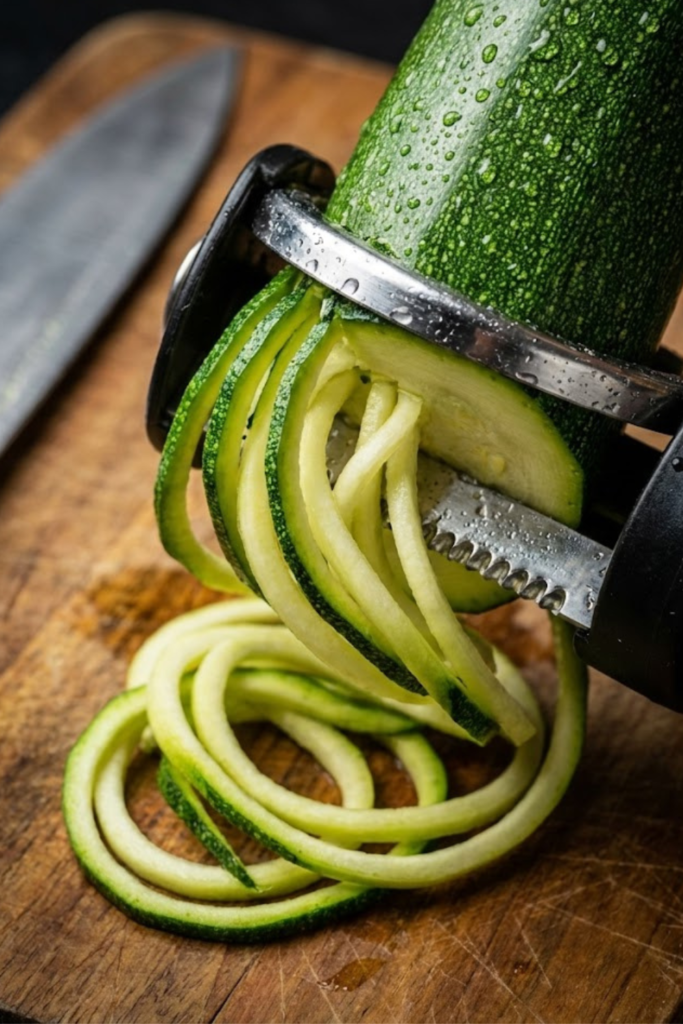
Step-by-Step: How to Make Chicken Zucchini Noodle Soup
Okay, class is in session! Just kidding. But really, making this soup is pretty straightforward if you follow the order. It’s all about timing. If you throw everything in at once, you’ll end up with a weird texture.
Here is how I do it in my kitchen.
1. Get That Base Going
Grab your biggest soup pot or Dutch oven. Put it on medium heat and add a glug of olive oil. Once it’s shimmering, toss in your chopped onions, celery, and carrots.
This part requires a little patience. You want the veggies to get soft but not brown. I usually let them cook for about 5 to 7 minutes while I clean up the cutting board. Sprinkle a little salt on them now—it helps pull the water out and concentrates the flavor.
2. The Simmer Phase
Once the onions look translucent (kinda see-through), pour in your chicken broth. This is also when I toss in the herbs. I usually tie fresh thyme and parsley together with a little string so I can fish them out later easily. A bay leaf is good here too.
Bring it to a boil, then turn the heat down to low. Let it simmer. This isn’t just to heat it up; it marries all those flavors together. 15 minutes is usually enough.
3. Chicken Time
If you are using raw chicken thighs, drop them in the broth now to poach. They usually take about 15-20 minutes to cook through. Once they are done, pull them out, shred them with two forks, and throw the meat back in.
If you are like me on a busy Tuesday and using rotisserie chicken, just shred it and dump it in now. You just need to warm it through.
4. The Zoodle Drop (Important!)
Here is the part where most people mess up. Do not add the zucchini noodles until you are literally ready to serve.
If you add them too early and let them sit in the simmering pot, they turn into mushy slime. Nobody wants that.
I turn the heat off completely. Then, I stir in the zoodles. The residual heat from the soup is enough to “cook” them to the perfect tender-crisp texture in just 2 or 3 minutes. Then, ladle it into bowls right away.

Secrets to Perfect Zoodles (No More Soggy Noodles!)
Okay, listen up. The biggest complaint I hear about zucchini noodles is that they get watery. You make a nice thick soup, you add the veggie noodles, and five minutes later, your soup tastes like watered-down tea. It’s gross.
I have spent a lot of time figuring this out, and I finally got it down. You don’t have to suffer through soggy zoodles.
The “Sweating” Trick
This step is annoying to do, but it makes a huge difference. If I have extra time, I put my raw zucchini noodles in a colander over the sink. Then, I sprinkle them with a good amount of salt.
I let them sit there for about 20 or 30 minutes. You will see water dripping out of them. That is water that won’t be diluting your soup! After they sit, I give them a good squeeze with a paper towel or a clean dish cloth to get the rest of the moisture out. It keeps them crunchy way longer.
Watch the Clock
I said this before, but I gotta say it again because it is that important. Zucchini is mostly water. It cooks fast. Like, really fast.
You really only need 2 or 3 minutes of heat. If you let them boil, the cell walls break down and they turn into mush. I usually just throw them in the hot broth right before I carry the bowl to the table. The heat from the liquid cooks them enough.
Serve It Right Away
This isn’t a soup that gets better as it sits on the stove for an hour. The longer those noodles sit in the hot liquid, the softer they get.
If you are waiting for your family to get to the table, keep the zoodles separate. Put a handful of raw zoodles in everyone’s bowl, and then pour the boiling hot soup over them right when you serve. That’s actually my favorite way to do it. It keeps the texture perfect.
No Spiralizer? No Problem.
If you don’t have one of those spiralizer gadgets, don’t worry about it. I have used a regular vegetable peeler to make long, wide ribbons. It looks fancy, kind of like pappardelle pasta. You can also just chop the zucchini into small cubes or half-moons. It all tastes the same in the end!
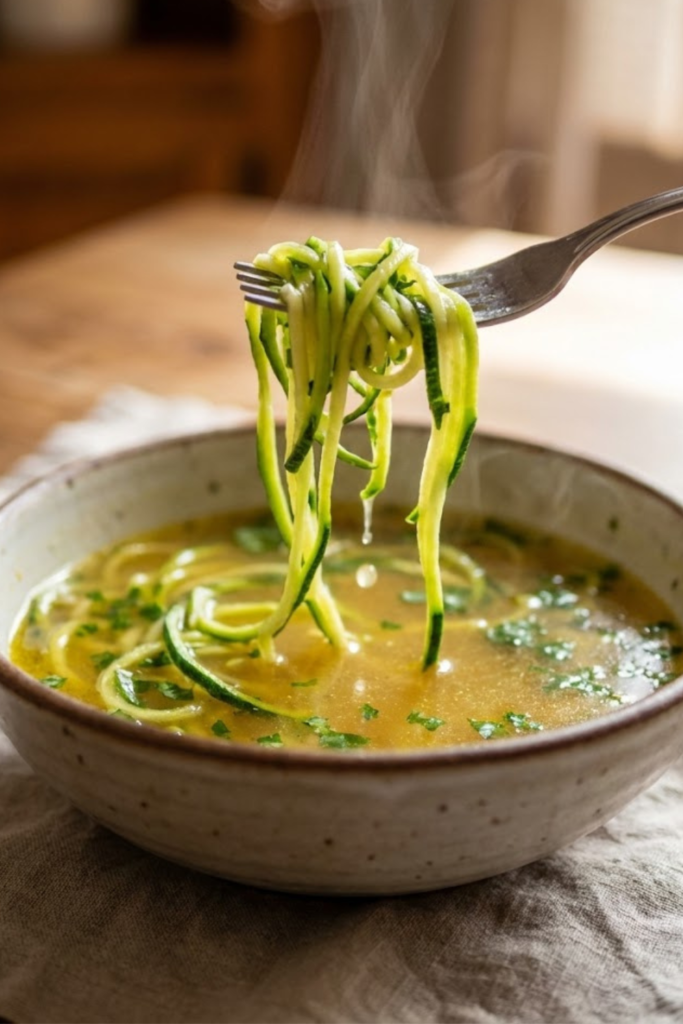
Storage, Freezing, and Reheating Tips
One of the best things about soup is having leftovers for lunch the next day. Being a teacher, I only get like 20 minutes for lunch, so having something I can just heat up is a lifesaver. But you have to be careful with this one, or the texture gets weird.
Here is how I keep it tasting fresh.
Fridge Life
If you have leftovers, put them in a sealed container in the fridge. It stays good for about 3 or 4 days.
But here is the thing: the noodles will get softer the longer they sit in the liquid. If I know I am going to have leftovers, I usually try to store the soup base and the noodles in separate containers. I just mix them in the bowl when I’m ready to eat. If they are already mixed, it’s totally fine, just expect the zucchini to be a little softer the next day.
The Golden Rule of Freezing
Can you freeze this soup? Yes, BUT there is a big catch.
Do not freeze the zucchini noodles. Just don’t do it.
When you freeze zucchini and then thaw it out, it turns into a watery mess that basically disintegrates when you touch it. It’s not appetizing.
If you want to stock your freezer, make the soup base—the broth, the chicken, the carrots, the celery, and the spices. Freeze that mixture in a big freezer bag or plastic container. It freezes beautifully.
When you are ready to eat it down the road, thaw the soup base and heat it up on the stove until it’s bubbling. Then, spiralize a fresh zucchini and throw it in right before serving. It tastes exactly like you just made it fresh.
Reheating Without Ruining It
If you are reheating soup that already has noodles in it from the night before, do it gently. Don’t boil it like crazy or the zucchini will fall apart.
I usually just use the microwave for about 2 minutes, or I heat it on the stove on low heat until it’s just warm enough to eat. You don’t need it to be boiling hot, just warm.
Easy Meal Prep
If you like to prep on Sundays (I try to, but sometimes I just want to nap), this recipe is great for that.
You can chop all your onions, carrots, and celery and put them in a baggie. You can even spiralize your zucchini ahead of time. Just put the raw noodles in a container with a paper towel at the bottom to soak up any extra moisture. They stay crisp in the fridge for about 3 days like that.
Then, when you get home from work tired, you just dump the veggies in the pot, add the broth and chicken, and you have a healthy dinner in 15 minutes.

So, that is pretty much it. You have a big bowl of soup that tastes amazing and won’t mess up your diet. It is crazy how much I used to miss pasta, but honestly, after eating this for a few years, I don’t really miss the bloating that came with it.
I hope you give this a try in your own kitchen. It is one of those meals that just makes you feel good after you eat it. And hey, if you want to add some hot sauce or extra lemon, go for it. Cooking is supposed to be fun, not a strict science test.
If you liked this recipe and want to save it for a rainy day, please pin this to your Keto Dinner board on Pinterest! It helps me out a ton and helps you find it when you are standing in the grocery store wondering what to buy.